
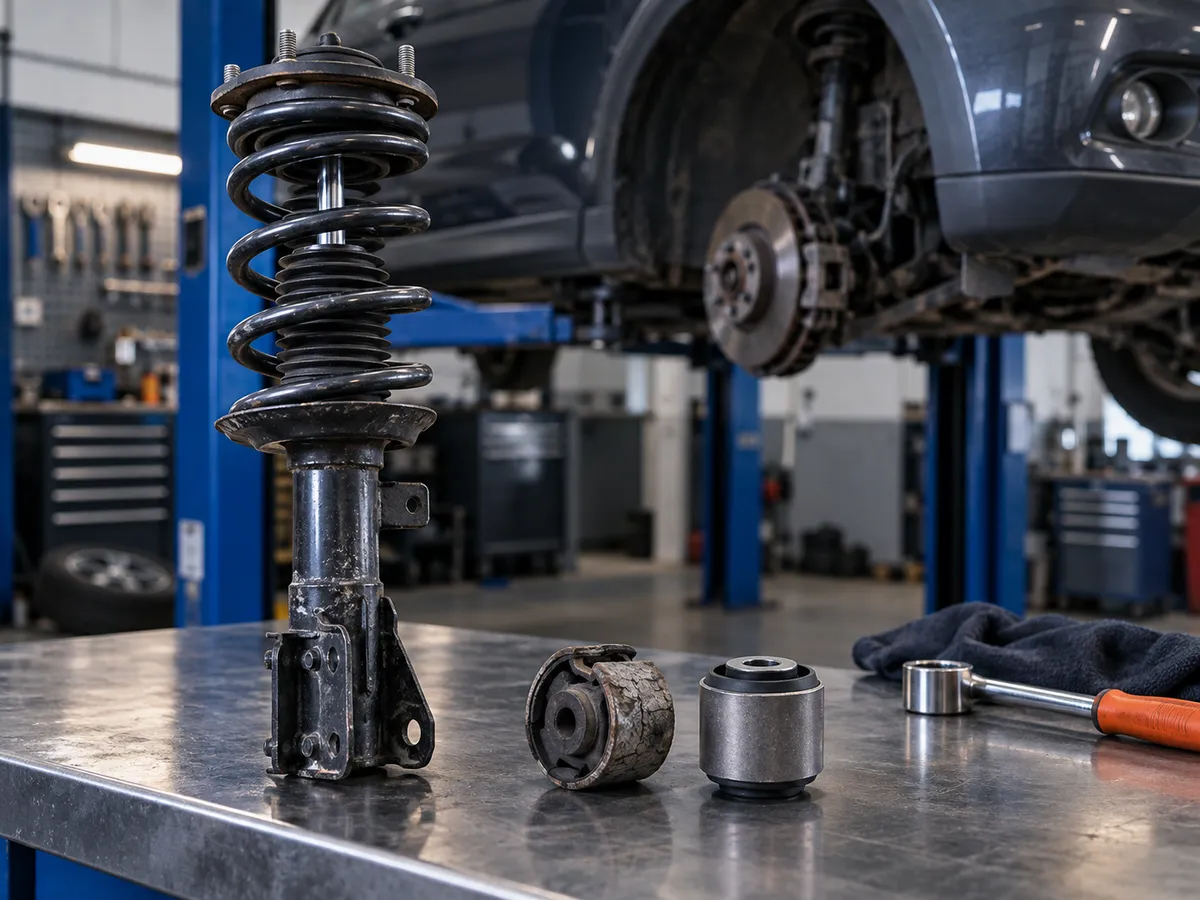
Shock absorbers
Shock absorbers control how the springs move, keeping the tyres on the road over bumps. Worn shocks let the car bounce and wallow, which lengthens braking distances.
Signs it needs replacing
- Car keeps bouncing after a speed breaker
- Oil leaking down the shock body
- Nose dives under braking
- Uneven, scalloped tyre wear
- Knocking over potholes
How often
Commonly 60,000–100,000 km, sooner on broken roads and with heavy loads. Have them inspected at services and check your owner’s manual.
General guidance based on how these cars are built and how they commonly wear. Your car’s own history matters more than any list, which is why a technician confirms the cause before quoting.
Buying the right one in Pakistan
- Replace in pairs on the same axle so both sides behave the same.
- Gas-charged shocks suit most modern cars; match the original type unless you know why you are changing.
- Check mounts and bump stops too; worn mounts make new shocks knock.
- Copies of genuine-brand shocks are sold locally; check packaging and markings.
Parts guides by car
- Toyota Corolla parts
- Toyota Yaris parts
- Toyota Vitz parts
- Toyota Aqua parts
- Toyota Prius parts
- Toyota Passo parts
- Toyota Premio parts
- Toyota Corolla Cross parts
- Toyota C-HR parts
- Toyota Camry parts
- Toyota Hilux parts
- Toyota Fortuner parts
- Toyota Land Cruiser Prado parts
- Toyota Land Cruiser parts
- Honda Civic parts
- Honda City parts
- Honda Vezel parts
- Honda BR-V parts
- Honda Fit parts
- Honda N-WGN parts
- Honda HR-V parts
- Honda Accord parts
- Honda Grace parts
- Suzuki Mehran parts
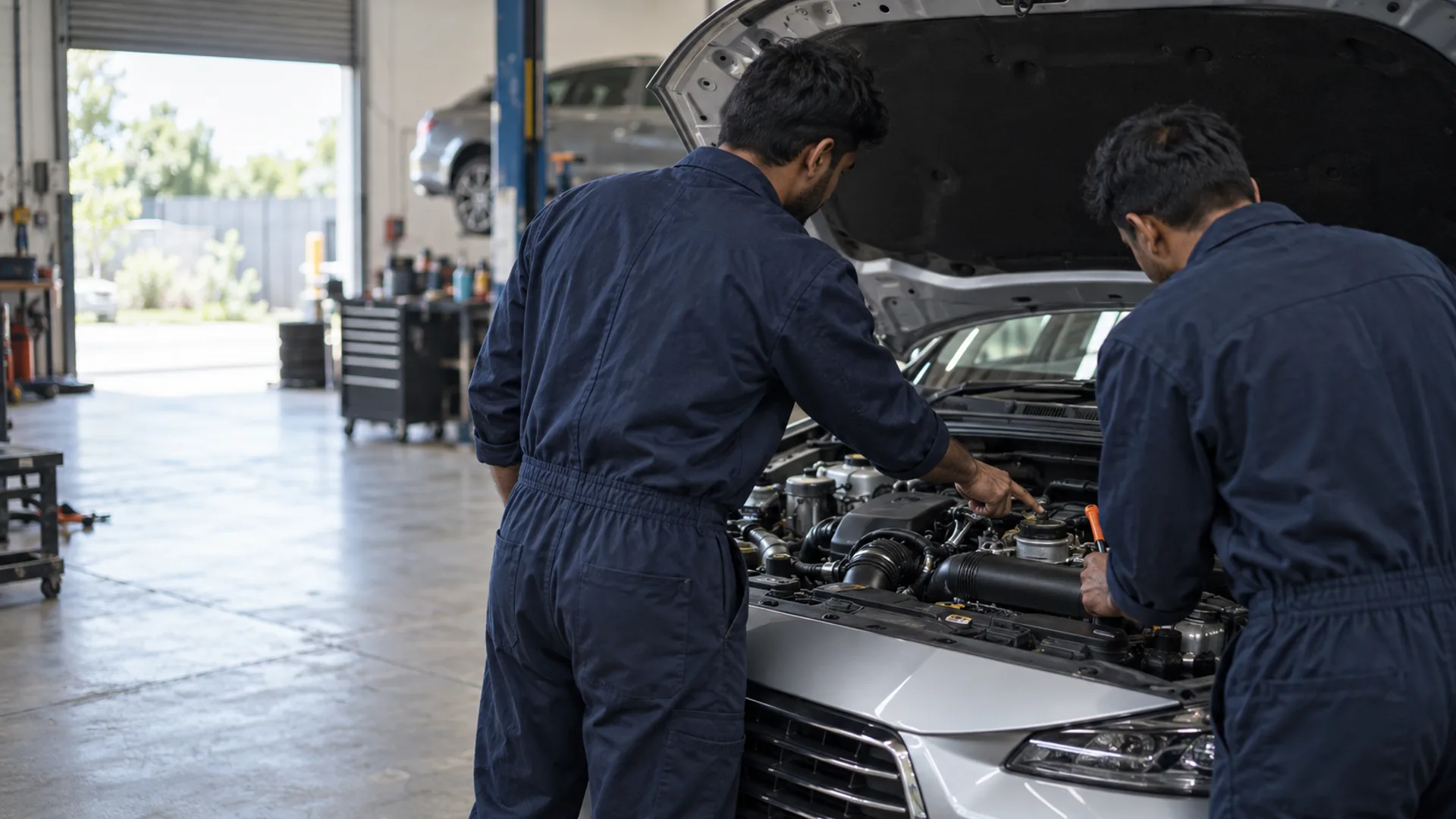
Have your shock absorbers fitted
Tell us the car and your city. A person calls back to confirm the right part for your engine code and what fitting costs.
Before you book
Questions we get asked

If your question is not here, ask it. We would rather answer honestly now than have you find out after booking.