

Squealing noise from engine
A high-pitched squeal from the engine, especially at start-up or when turning the steering or switching on the AC, is usually a slipping drive belt or a worn pulley. It is not an emergency, but a broken belt can stop charging, cooling or power steering.
Keep an eye on it
Likely causes
| Likely cause | How likely | The fix |
|---|---|---|
Worn or glazed drive belt Heat and dust harden belts until they slip. Inspection shows cracks or shiny surfaces. | Common | Drive belt replacement |
Weak tensioner or idler pulley A worn tensioner lets the belt slip. Watching it jump with the engine running confirms it. | Common | Drive belt replacement |
AC compressor clutch drag A seizing compressor drags the belt when the AC engages. Squeal only with AC on points to it. | Possible | Ac compressor repair |
Power steering pump loadSome cars only Hydraulic pumps on older cars load the belt on full lock. Squeal while parking points to it. | Possible | Power steering repair |
Water pump bearing A failing water pump bearing squeals or chirps. Belt-off pulley spin confirms it. | Possible | Water pump replacement |
Alternator bearing A worn alternator bearing whines and can stress the belt. Spin test confirms it. | Possible | Alternator repair |
Timing belt or tensioner noiseSome cars only On engines with a timing belt, a worn tensioner can whine behind the cover. Inspection confirms it, and the belt should be changed on schedule. | Less common | Timing belt replacement |
General guidance based on how these cars are built and how they commonly wear. Your car’s own history matters more than any list, which is why a technician confirms the cause before quoting.
Can you keep driving?
Yes for now, but watch for the battery or temperature warning. If the belt breaks, stop, as the water pump may stop on many engines.
Checks you can do first
- Note whether the squeal is worse when cold, with AC on, or turning the wheel.
- Look at the belt for cracks or glazing with the engine off.
- Check for oil or coolant on the belt.
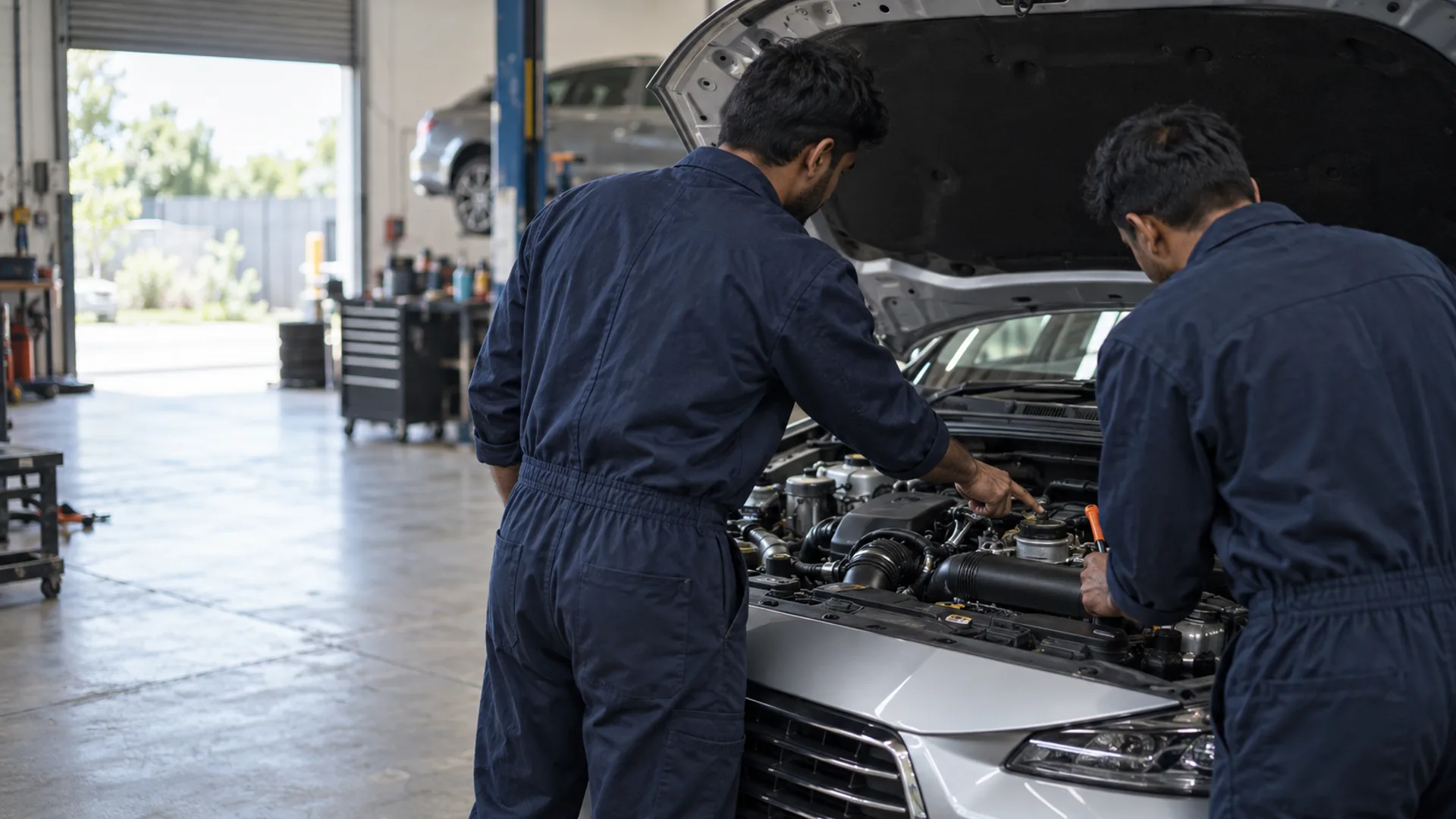
How a technician diagnoses it
Step 1
Inspect belt condition and tension.
Step 2
Check pulleys for wobble and roughness with the belt off.
Step 3
Test AC and steering loads separately.
Step 4
Check timing belt service history where applicable.
By car model
- Toyota Land Cruiser Prado squealing from the engine
- Suzuki Mehran squealing from the engine
- Suzuki Bolan squealing from the engine
- Suzuki Ravi squealing from the engine
- Suzuki Khyber squealing from the engine
- Suzuki Margalla squealing from the engine
- Suzuki Baleno squealing from the engine
- Daihatsu Cuore squealing from the engine
- Hyundai Santro squealing from the engine
- Mitsubishi Lancer squealing from the engine
- Toyota Hiace squealing from the engine
- Suzuki APV squealing from the engine
Parts usually involved
Have it diagnosed
Tell us the car, the symptom and your city. A person calls back to say what we can do there and what the diagnosis costs.
Before you book
Questions we get asked

If your question is not here, ask it. We would rather answer honestly now than have you find out after booking.