
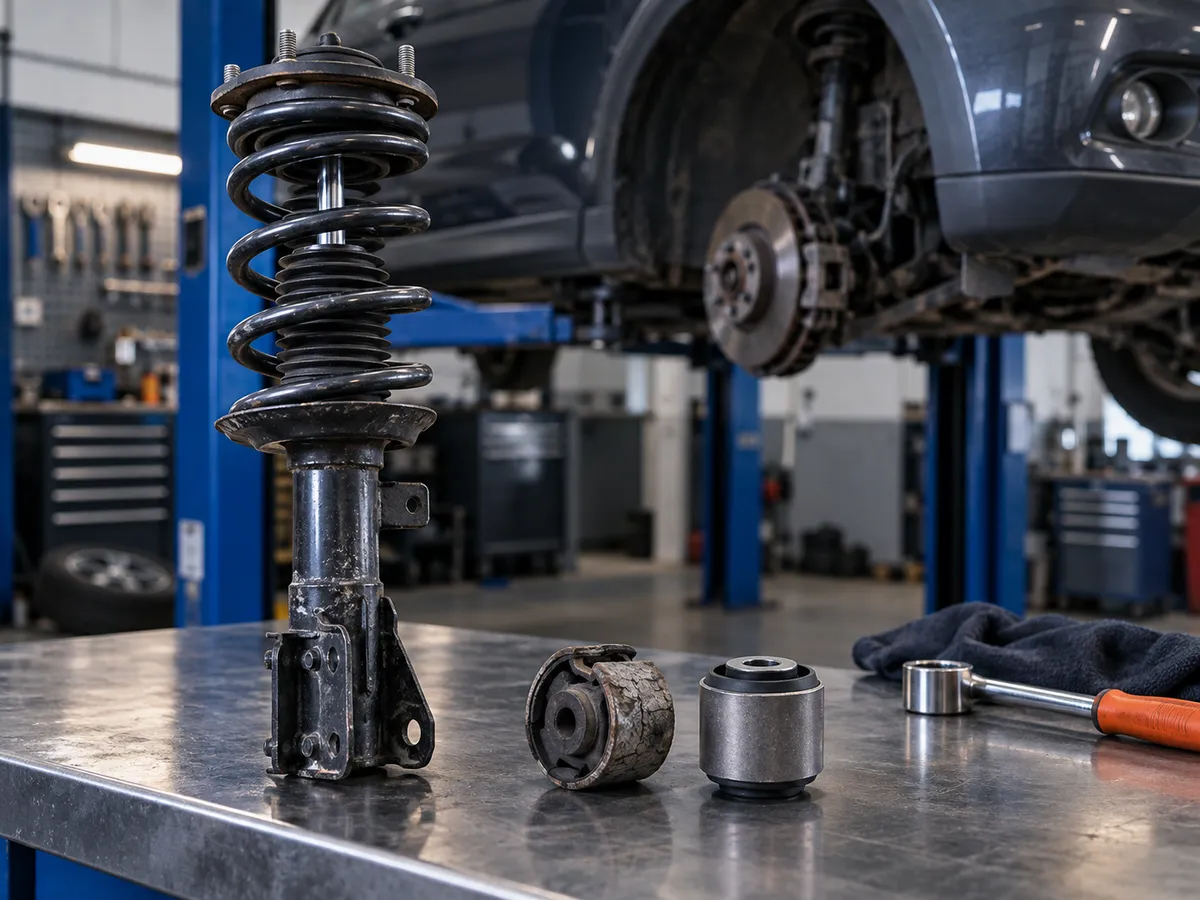
Daihatsu Cuore with heavy steering
On a Daihatsu Cuore, this usually comes down to low power steering fluid or a leak or slipping or broken drive belt. Below are the causes that fit this car, most likely first, and what fixes each one.
Why a Daihatsu Cuore is with heavy steering
0.85 L ED-20 three-cylinder petrol
| Likely cause | How likely | The fix |
|---|---|---|
Low power steering fluid or a leakFits the Cuore Leaking hoses or rack seals let the hydraulic pump starve and whine. Fluid level and leak tracing confirm it. | Common | Power steering repair |
Slipping or broken drive beltFits the Cuore Hydraulic pumps on older cars are belt-driven; a glazed belt slips under load. Inspection and tension checks show it. | Common | Drive belt replacement |
Electric power steering fault Torque sensor or motor faults turn off assistance and light the EPS warning. A scan of the steering module confirms it. | Common | Warning light diagnosis |
Low tyre pressure Soft front tyres widen the contact patch and make steering heavy. A pressure gauge confirms it. | Common | Tire replacement |
Low voltage to the EPS motor Electric steering draws high current; a weak battery or alternator reduces assistance at idle. Charging tests show it. | Possible | Charging system inspection |
Seized ball joints or tie rod ends Dry, rusted joints resist turning, worse after dust and water exposure. Lifting the car and turning the wheels shows the stiffness. | Possible | Ball joint replacement |
Worn steering rack Internal rack wear causes heavy spots or uneven assistance. Road testing and rack inspection confirm it. | Less common | Steering rack repair |
Causes marked “Fits the Cuore” apply because of how this car is built: its petrol engine, MANUAL/AUTOMATIC gearbox, timing belt or a CNG conversion.
General guidance based on how these cars are built and how they commonly wear. Your car’s own history matters more than any list, which is why a technician confirms the cause before quoting.
Can you keep driving?
You can usually drive carefully to a workshop, but if assistance cuts out completely or comes and goes, avoid busy roads and tight manoeuvres. Stop if you hear loud whining with burning smell.
Checks you can do first
- Check all four tyre pressures.
- On hydraulic systems, check the power steering fluid level and look for leaks under the front.
- Listen for whining when turning the wheel at a standstill.
- Check whether the EPS or steering warning light is on.
How a technician diagnoses it on a Cuore
Step 1
Check tyre pressures and steering type (hydraulic or electric).
Step 2
On hydraulic systems, check fluid, belt and pump pressure.
Step 3
On electric systems, scan the EPS module and check supply voltage.
Step 4
Inspect joints and rack for binding with the front lifted.
Other Daihatsu Cuore problems
- Cuore overheatingWidely reported on this model
- Cuore jerking through its automatic gearboxWidely reported on this model
- Cuore having trouble starting on CNGWidely reported on this model
- Cuore not starting
- Cuore cranking but not starting
- Cuore showing a check engine light
- Cuore AC not cooling
- Cuore squeaking when braking
- Cuore having a soft brake pedal
Get your Cuore looked at
Tell us the Daihatsu Cuore, the symptom and where the car is. A person calls back to say what we can do in your city and what the diagnosis costs.
Before you book
Questions we get asked

If your question is not here, ask it. We would rather answer honestly now than have you find out after booking.