
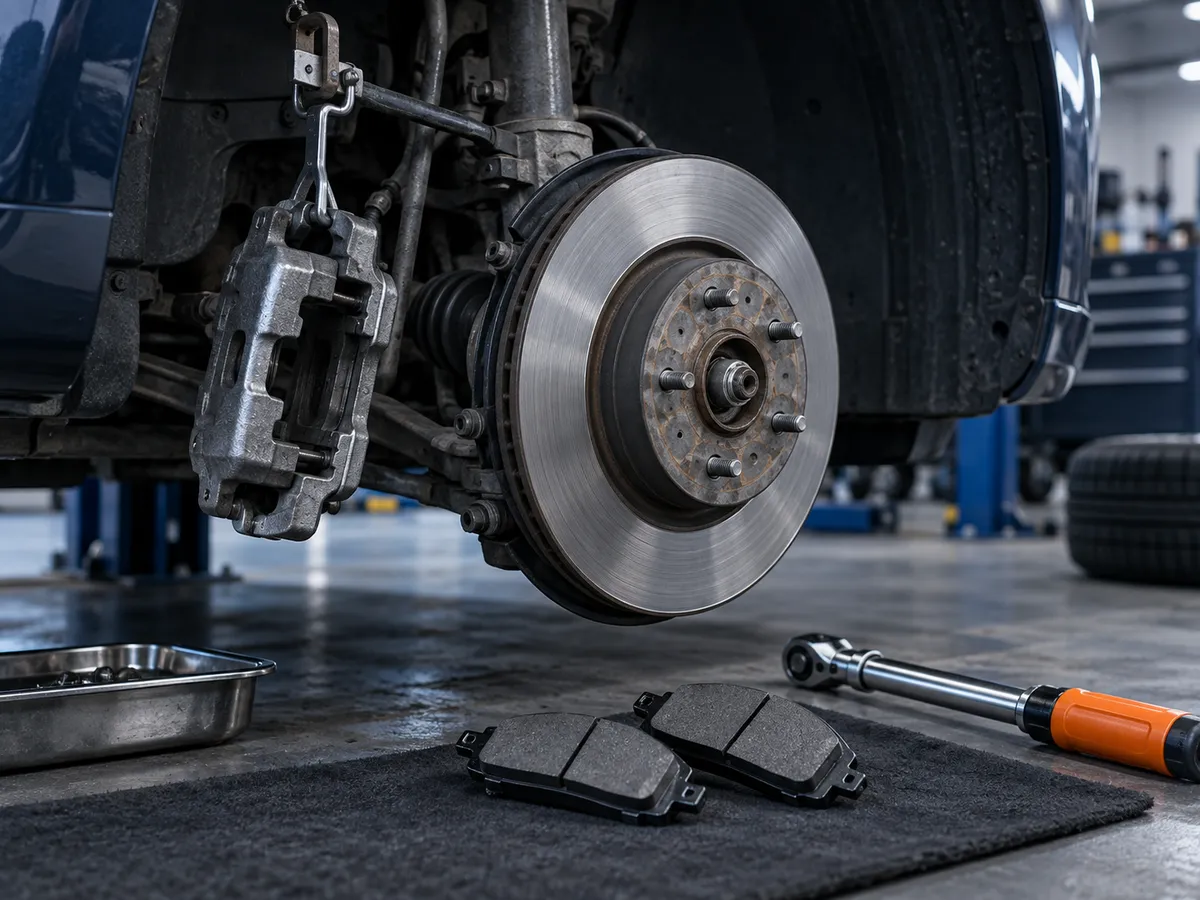
Brake pads
Brake pads press against the brake discs to slow the car. Their friction material wears down with use, and once it is gone the metal backing plate grinds into the disc.
Signs it needs replacing
- Squealing from a wear indicator when braking
- Grinding or metal-on-metal noise
- Longer stopping distances
- Pad material thinner than about 3 mm when seen through the wheel
How often
Front pads commonly last 20,000–50,000 km depending on driving; heavy city traffic and hill driving wear them faster. Have them inspected at every service and check your owner’s manual.
General guidance based on how these cars are built and how they commonly wear. Your car’s own history matters more than any list, which is why a technician confirms the cause before quoting.
Buying the right one in Pakistan
- Counterfeit pads in copied boxes are common; poor friction material can fade badly when hot.
- Ceramic pads produce less dust; semi-metallic ones can be noisier but handle heat well. Follow the car’s original type if unsure.
- Match by axle, model year and caliper type, as variants of one model may use different pads.
- Replace pads on both wheels of the same axle together.
Parts guides by car
- Toyota Corolla parts
- Toyota Yaris parts
- Toyota Vitz parts
- Toyota Aqua parts
- Toyota Prius parts
- Toyota Passo parts
- Toyota Premio parts
- Toyota Corolla Cross parts
- Toyota C-HR parts
- Toyota Camry parts
- Toyota Hilux parts
- Toyota Fortuner parts
- Toyota Land Cruiser Prado parts
- Toyota Land Cruiser parts
- Honda Civic parts
- Honda City parts
- Honda Vezel parts
- Honda BR-V parts
- Honda Fit parts
- Honda N-WGN parts
- Honda HR-V parts
- Honda Accord parts
- Honda Grace parts
- Suzuki Mehran parts
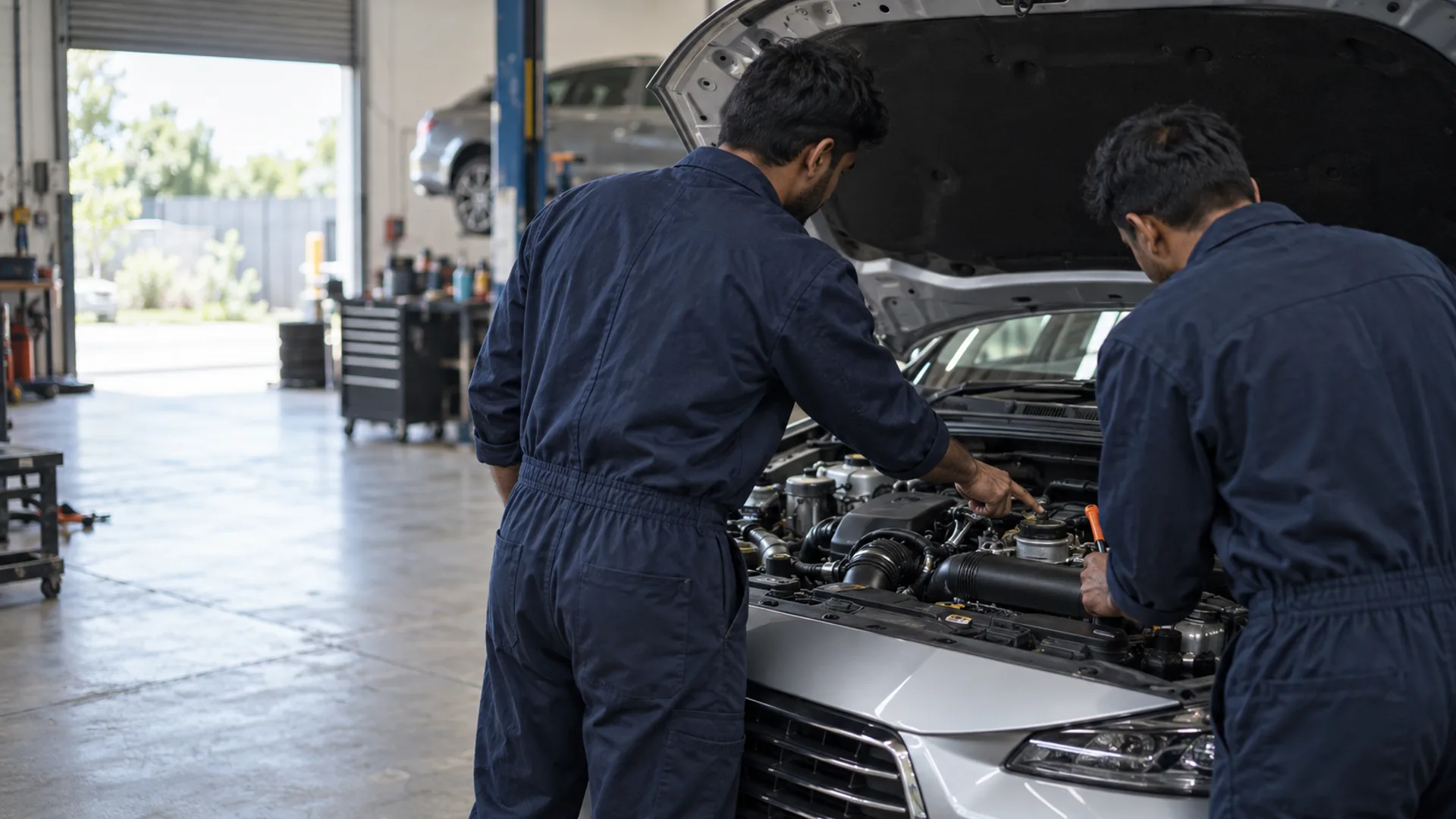
Have your brake pads fitted
Tell us the car and your city. A person calls back to confirm the right part for your engine code and what fitting costs.
Before you book
Questions we get asked

If your question is not here, ask it. We would rather answer honestly now than have you find out after booking.