
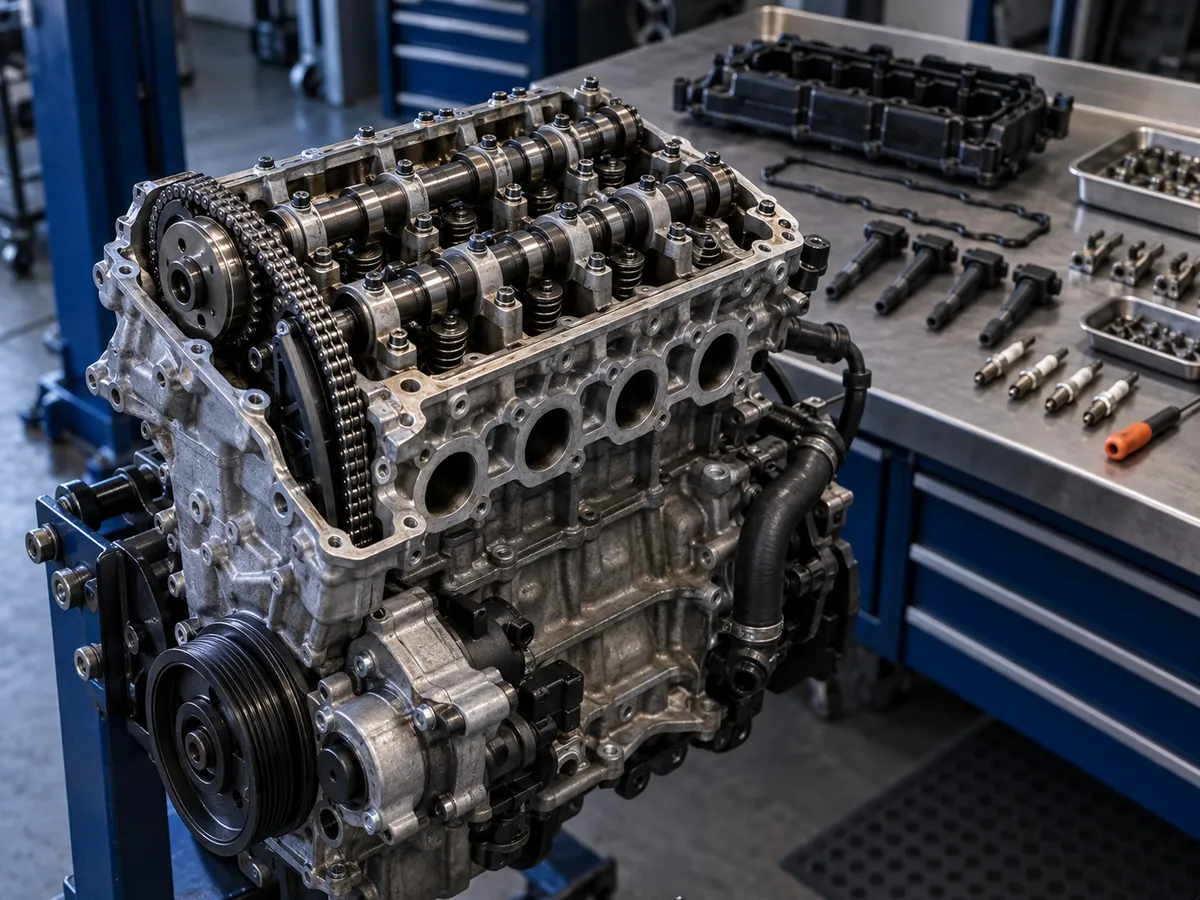
White smoke from exhaust
Thin white vapour on a cool morning that disappears once warm is normal condensation. Thick white smoke that continues when the engine is hot, especially with a sweet smell and falling coolant, points to coolant burning from a head gasket or cracked head. That needs urgent attention.
Get it checked soon
Likely causes
| Likely cause | How likely | The fix |
|---|---|---|
Normal condensation Water vapour forms in a cold exhaust and clears as it heats. No coolant loss confirms it is harmless. | Common | General inspection |
Blown head gasket Coolant leaking into the cylinders burns as thick white smoke. A combustion leak test and coolant loss confirm it. | Possible | Head gasket replacement |
Cracked cylinder head after overheating Severe overheating can crack an aluminium head. Pressure testing the head confirms it. | Less common | Cylinder head repair |
Diesel injector or glow plug faultSome cars only Unburnt diesel looks like white or grey smoke, especially when cold. Injector and glow plug tests confirm it. | Common | Fuel injector service |
Turbo oil seal leakSome cars only A leaking turbo seal can give white-blue smoke. Checking for oil in the intake and exhaust side of the turbo confirms it. | Possible | Engine diagnosis |
Condensation on a hybrid that makes short engine runsSome cars only Hybrid engines switch off often and may not get hot enough to clear moisture, so white vapour can be more noticeable. With no coolant loss, it is normal. | Possible | General inspection |
Overheating-damaged gasket on an older carSome cars only Older engines with years of plain water in the radiator are more prone to gasket and head corrosion. Coolant tests and a compression check help confirm it. | Possible | Head gasket replacement |
General guidance based on how these cars are built and how they commonly wear. Your car’s own history matters more than any list, which is why a technician confirms the cause before quoting.
Can you keep driving?
Thin vapour that clears within minutes: yes. Thick, persistent white smoke with coolant loss or overheating: no; stop and have the cooling system checked before the engine is damaged.
Checks you can do first
- Note whether the smoke disappears once the engine is warm.
- Check the coolant reservoir level over several days.
- Smell the smoke; coolant smells sweet.
- Look at the oil filler cap for milky, creamy residue.
How a technician diagnoses it
Step 1
Check coolant level and pressure-test the cooling system.
Step 2
Run a combustion gas test on the coolant.
Step 3
Perform a compression or leak-down test.
Step 4
On diesels, test injectors and glow plugs.
By car model
- Toyota Corolla blowing white smoke
- Toyota Prius blowing white smoke
- Toyota Camry blowing white smoke
- Toyota Hilux blowing white smoke
- Toyota Fortuner blowing white smoke
- Toyota Land Cruiser Prado blowing white smoke
- Toyota Land Cruiser blowing white smoke
- Honda Civic blowing white smoke
- Honda Fit blowing white smoke
- Nissan Sunny blowing white smoke
- Nissan Note blowing white smoke
- Hyundai Santa Fe blowing white smoke
- Kia Carnival blowing white smoke
- MG HS blowing white smoke
- Haval H6 blowing white smoke
- Haval Jolion blowing white smoke
- Mitsubishi Pajero blowing white smoke
- Toyota Probox blowing white smoke
- Toyota Noah blowing white smoke
- Toyota Voxy blowing white smoke
- Toyota Hiace blowing white smoke
- Toyota Corolla Axio blowing white smoke
- Toyota Crown blowing white smoke
Parts usually involved
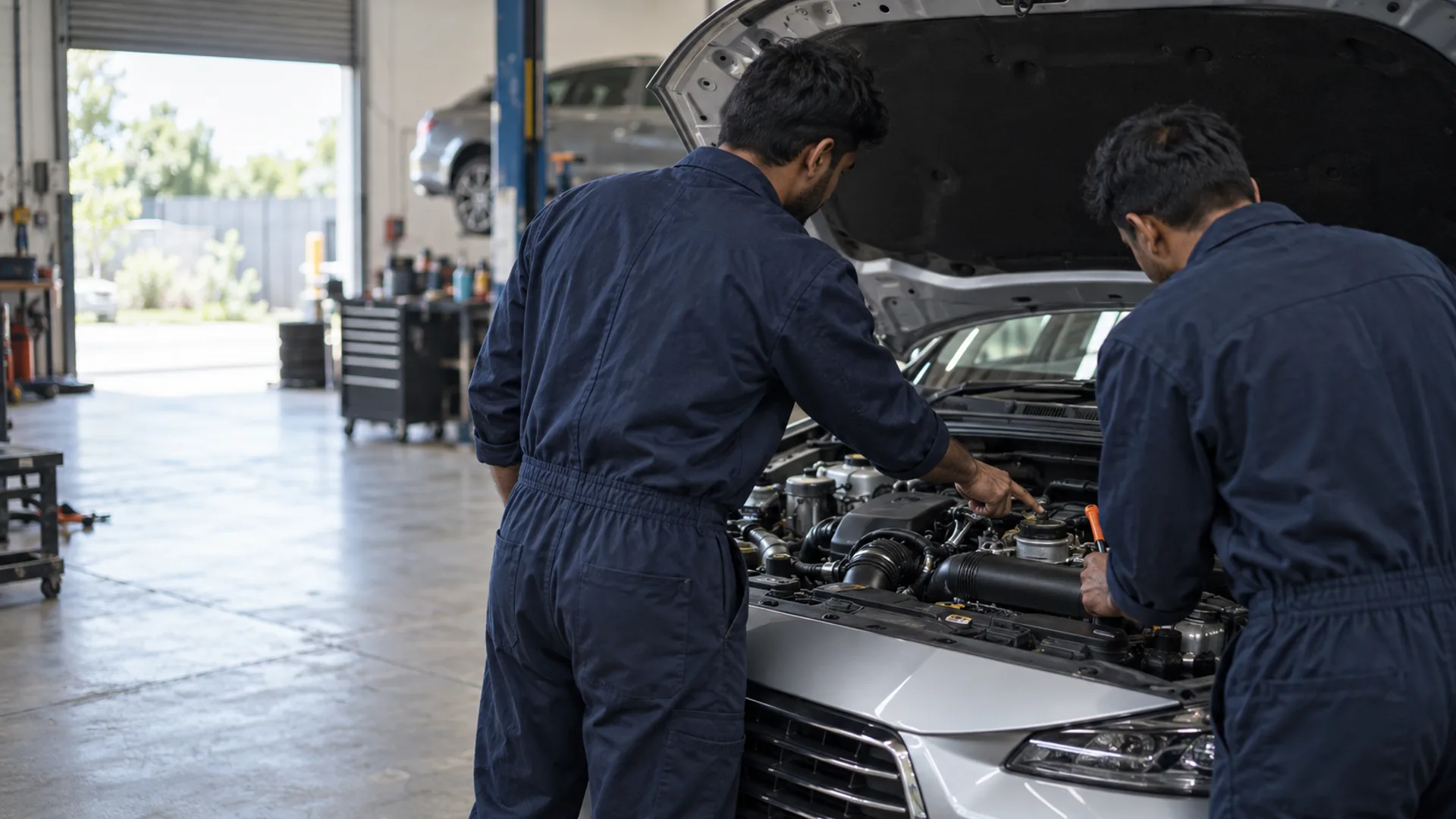
Have it diagnosed
Tell us the car, the symptom and your city. A person calls back to say what we can do there and what the diagnosis costs.
Before you book
Questions we get asked

If your question is not here, ask it. We would rather answer honestly now than have you find out after booking.