
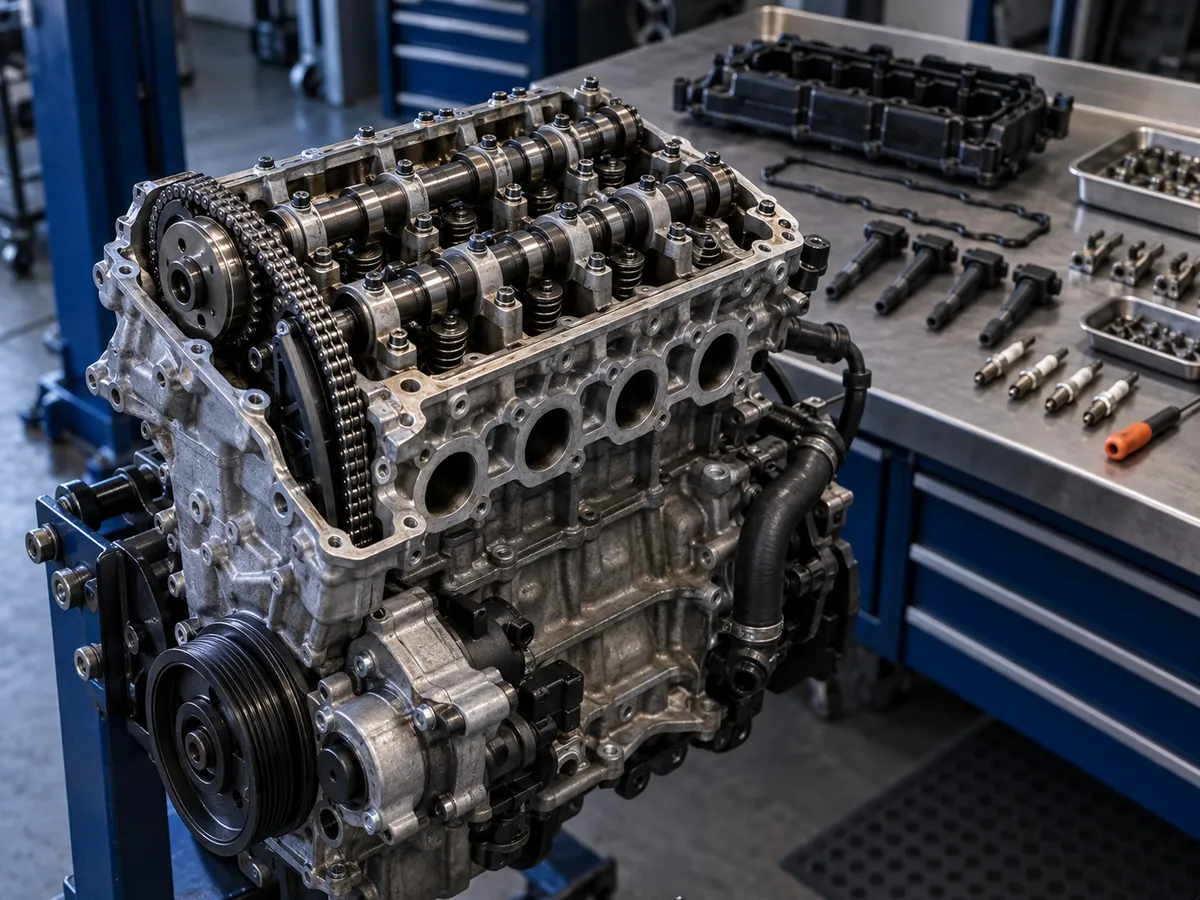
Toyota Corolla blowing blue smoke
Early 1ZZ-FE 1.8 litre engines in the 9th-generation car are widely reported to burn oil as the piston rings wear, showing as blue smoke and a falling dipstick level. Below are the causes that fit a Toyota Corolla, most likely first, and what fixes each one.
Why a Toyota Corolla is blowing blue smoke
1.3 L 2NZ-FE petrol · 1.6 L 1ZR-FE petrol · 1.8 L 1ZZ-FE petrol · 1.8 L 2ZR-FE petrol · 2.0 L 2C diesel
| Likely cause | How likely | The fix |
|---|---|---|
High-mileage wear on an older engineFits the Corolla Older engines that missed oil changes wear rings and bores, increasing oil consumption. A compression test and oil-use record show the trend. | Common | Engine overhaul |
Ring wear from running hot on CNGFits the Corolla Lean, hot gas running and dry valve seats accelerate wear on some converted engines. A compression test reveals it. | Possible | Piston ring replacement |
Worn piston rings Worn rings let oil past into the combustion chamber, showing as smoke under load. A compression and leak-down test confirm it. | Common | Piston ring replacement |
Worn valve stem seals Hardened seals let oil drip down the valves overnight, giving a puff of smoke at start-up. The pattern points to it. | Common | Cylinder head repair |
Blocked PCV valve A clogged crankcase ventilation valve pushes oil into the intake. Checking the valve and hoses confirms it. | Possible | Engine diagnosis |
Wrong or overfilled oil Overfilling or using too thin an oil increases consumption. Correcting level and grade is the first step. | Possible | Oil change |
Causes marked “Fits the Corolla” apply because of how this car is built: its petrol/diesel engine, MANUAL/AUTOMATIC/CVT gearbox, timing chain or a CNG conversion.
General guidance based on how these cars are built and how they commonly wear. Your car’s own history matters more than any list, which is why a technician confirms the cause before quoting.
Can you keep driving?
Usually yes, with frequent oil level checks. If oil use is heavy, the oil light comes on, or the catalytic converter starts to clog, have it repaired before longer trips.
Checks you can do first
- Check the oil level weekly and note how much you top up.
- Note when the smoke appears: at start-up, on deceleration, or under acceleration.
- Look for oil wetness around the exhaust tail pipe.
- Check that the oil level is not overfilled above the max mark.
How a technician diagnoses it on a Corolla
Step 1
Record oil consumption over a set distance.
Step 2
Run compression and leak-down tests.
Step 3
Check PCV system and turbo shaft play where fitted.
Step 4
Inspect spark plugs for oil fouling to find the cylinder.
Other Toyota Corolla problems
- Corolla AC not coolingWidely reported on this model
- Corolla knocking from the suspensionWidely reported on this model
- Corolla having trouble starting on CNGWidely reported on this model
- Corolla hard to start (diesel)Widely reported on this model
- Corolla not starting
- Corolla cranking but not starting
- Corolla showing a check engine light
- Corolla squeaking when braking
- Corolla having a soft brake pedal
Parts usually involved
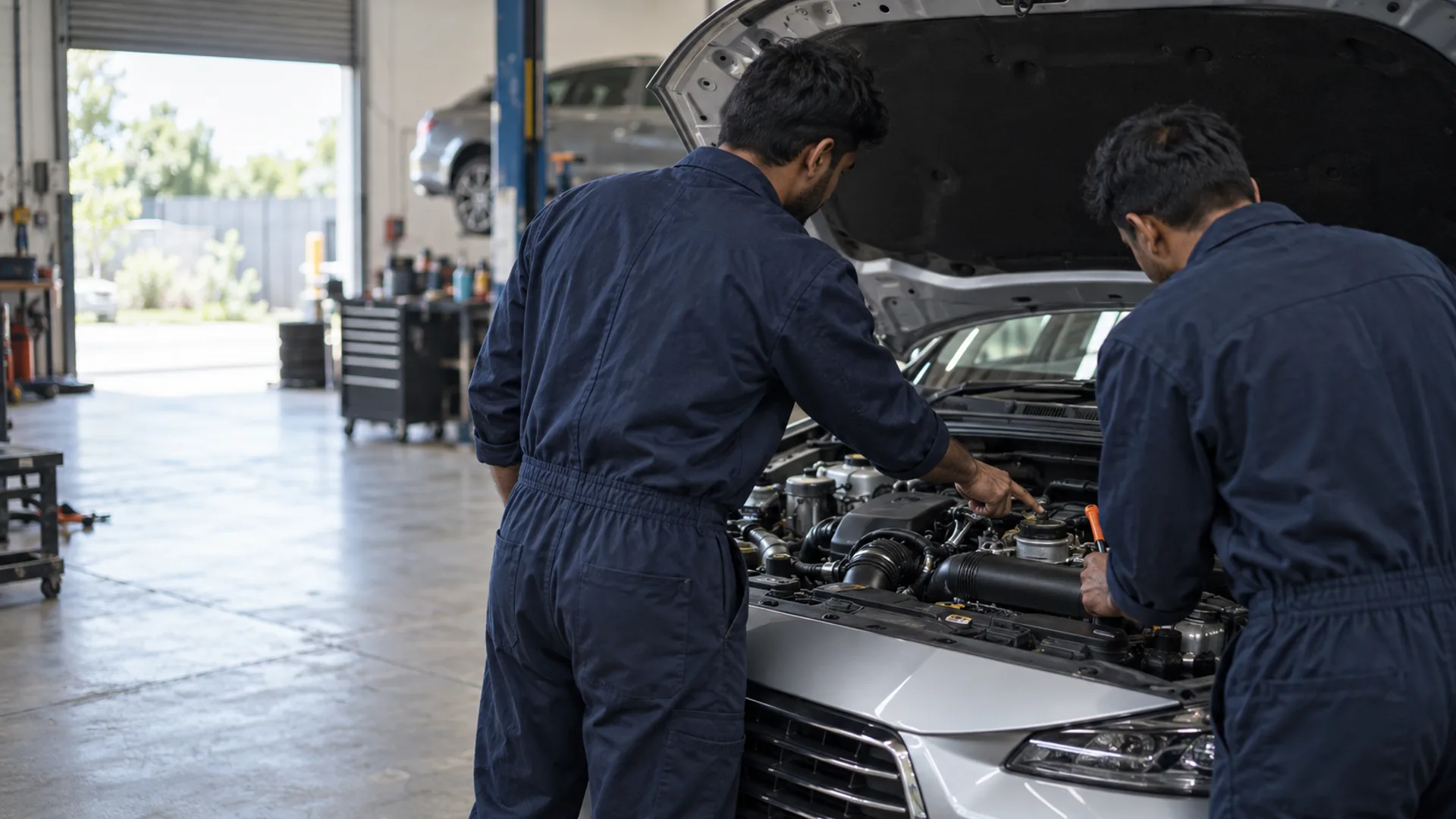
Get your Corolla looked at
Tell us the Toyota Corolla, the symptom and where the car is. A person calls back to say what we can do in your city and what the diagnosis costs.
Before you book
Questions we get asked

If your question is not here, ask it. We would rather answer honestly now than have you find out after booking.