
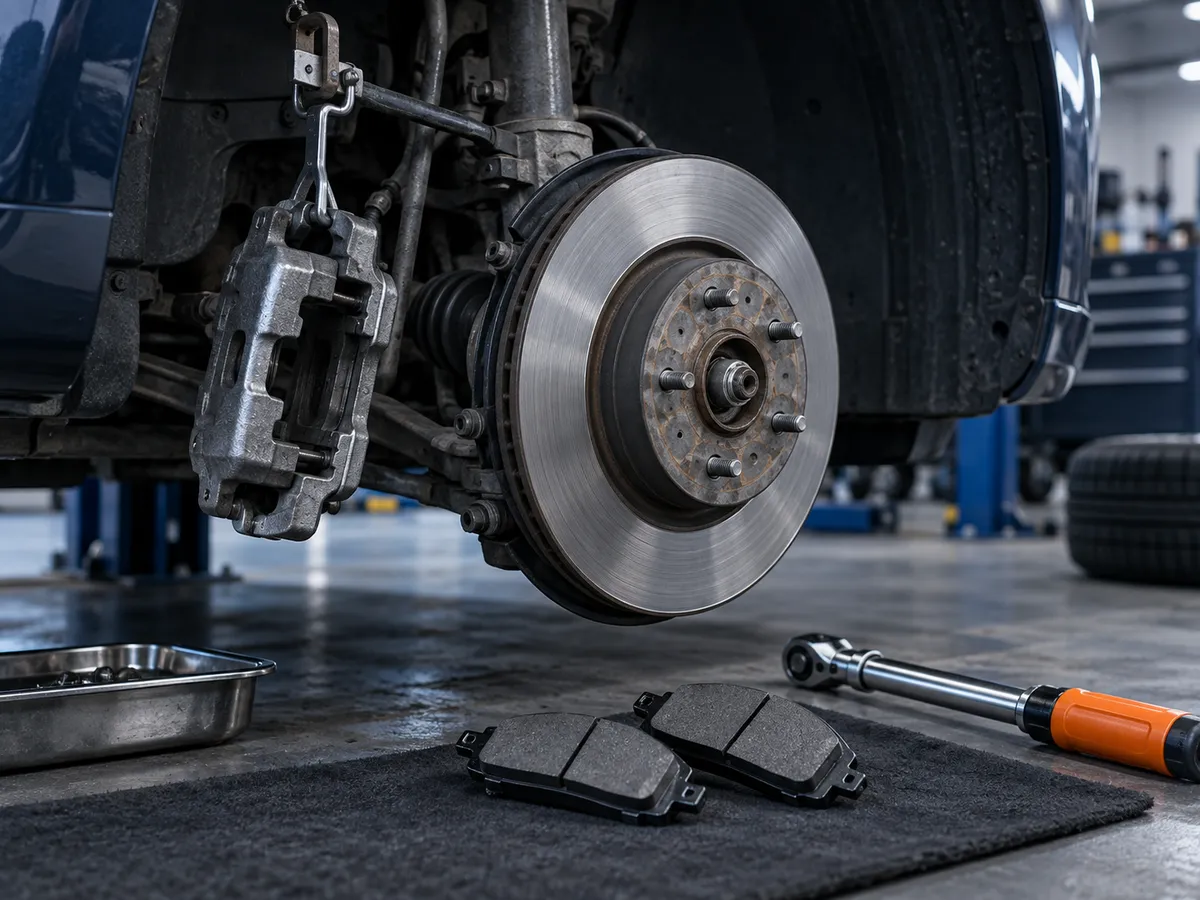
Honda Civic squeaking when braking
On a Honda Civic, this usually comes down to rear drum shoes or self-adjuster or seized caliper slide pins on an older car. Below are the causes that fit this car, most likely first, and what fixes each one.
Why a Honda Civic is squeaking when braking
1.8 L R18 i-VTEC petrol · 1.5 L L15B turbo petrol
| Likely cause | How likely | The fix |
|---|---|---|
Rear drum shoes or self-adjusterFits the Civic Many local cars have rear drums, where worn shoes or dust inside the drum cause squeak and scraping. Removing the drum shows the wear. | Possible | Brake drum service |
Seized caliper slide pins on an older carFits the Civic Dry or corroded slide pins hold the pad against the disc so it drags and squeals. Checking pin movement and uneven pad wear confirms it. | Possible | Brake caliper repair |
Pads worn to the wear indicator A small metal tab on many pads squeals against the disc when the pad is nearly worn. Measuring pad thickness confirms it. | Common | Brake pad replacement |
Dust and grit between pad and disc Pakistani road dust packs into the brakes and causes squeal. Cleaning and inspecting the pads, with lubrication of the slide pins, often cures it. | Common | Brake noise diagnosis |
Hard or low-grade aftermarket pads Cheap pads with hard compounds squeal and can glaze the disc. Identifying the pad brand and compound points to it. | Common | Brake pad replacement |
Glazed or scored discs Overheated discs develop a hard glaze or grooves that vibrate against the pad. Measuring disc thickness and runout decides whether to skim or replace. | Possible | Brake disc replacement |
Causes marked “Fits the Civic” apply because of how this car is built: its petrol engine, MANUAL/AUTOMATIC/CVT gearbox, timing chain or a CNG conversion.
General guidance based on how these cars are built and how they commonly wear. Your car’s own history matters more than any list, which is why a technician confirms the cause before quoting.
Can you keep driving?
Yes, for now, if the car stops straight and the pedal feels normal. If the squeal turns into grinding or the pedal changes, stop using the car until it is inspected.
Checks you can do first
- Note whether the squeak is constant, only when braking, or only in the morning.
- Look through the wheel spokes at the pad thickness if you can see it.
- Check the brake fluid level in the reservoir; it drops as pads wear.
- Note whether the noise started after new pads were fitted.
How a technician diagnoses it on a Civic
Step 1
Remove the wheels and measure pad and disc thickness.
Step 2
Check caliper slide pins and pistons for free movement.
Step 3
Inspect rear drums and shoes where fitted.
Step 4
Road-test to confirm when the noise occurs.
Other Honda Civic problems
- Civic AC not coolingWidely reported on this model
- Civic knocking from the suspensionWidely reported on this model
- Civic juddering or whining from the CVTWidely reported on this model
- Civic vibrating at idleWidely reported on this model
- Civic smelling of fuelWidely reported on this model
- Civic not starting
- Civic cranking but not starting
- Civic showing a check engine light
- Civic having a soft brake pedal
Parts usually involved
Get your Civic looked at
Tell us the Honda Civic, the symptom and where the car is. A person calls back to say what we can do in your city and what the diagnosis costs.
Before you book
Questions we get asked
If your question is not here, ask it. We would rather answer honestly now than have you find out after booking.