
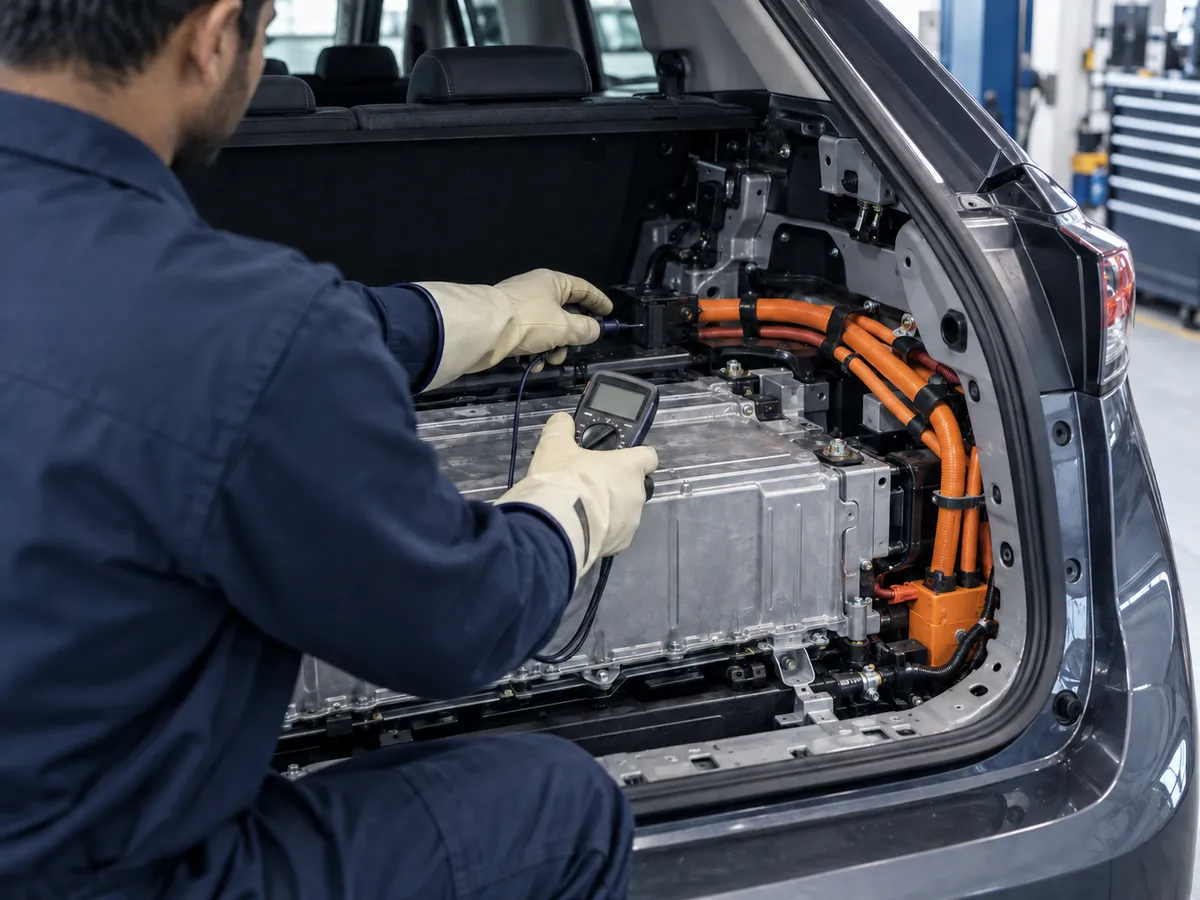
Honda Fit with a weak hybrid battery
IMA hybrid batteries in older Fits lose capacity with age, and assist from the motor fades. Below are the causes that fit a Honda Fit, most likely first, and what fixes each one.
Why a Honda Fit is with a weak hybrid battery
1.3 L L13 petrol · 1.5 L L15 petrol · 1.3 L LDA IMA hybrid · 1.5 L LEB i-DCD hybrid
| Likely cause | How likely | The fix |
|---|---|---|
Age-related loss of module capacityFits the Fit Nickel-metal hydride and lithium modules lose capacity with years and heat cycles. Discharge testing shows which modules hold less charge. | Common | Hybrid battery diagnosis |
Overheating from a clogged cooling fanFits the Fit A dusty fan keeps the pack hot, which speeds up ageing and makes the computer limit charging. Fan cleaning and temperature logging confirm it. | Common | Inverter cooling inspection |
Imported used car with a tired packFits the Fit Many imported hybrids arrive with packs that have already done many years abroad. A pre-purchase battery test reveals the remaining health. | Common | Hybrid battery diagnosis |
Imbalanced modules after long storageFits the Fit Cars standing unused for weeks let modules self-discharge unevenly. Block voltage readings spread apart and balancing may restore some performance. | Possible | Hybrid battery repair |
Corroded bus bars and terminalsFits the Fit Corrosion on the module links raises resistance and mimics weak modules. It is found on inspection when the pack is opened. | Possible | Hybrid battery repair |
Faulty battery sensor or ECU readingFits the Fit A failing voltage or current sensor can make a healthy pack look weak. Comparing sensor data with direct measurements confirms it. | Less common | Hybrid electrical diagnosis |
Causes marked “Fits the Fit” apply because of how this car is built: its petrol/hybrid engine, CVT/DCT gearbox, timing chain.
General guidance based on how these cars are built and how they commonly wear. Your car’s own history matters more than any list, which is why a technician confirms the cause before quoting.
Can you keep driving?
Usually yes, for normal driving, while it still enters READY without warnings. Avoid long steep climbs at full load and get it tested before it sets a fault.
Checks you can do first
- Watch the battery bars on the display: rapid jumps from low to full suggest reduced capacity.
- Compare your fuel average now with what the car did a few months ago on the same routes.
- Check the hybrid battery fan intake for dust and blockage.
- Note whether the car has been parked for long spells, which can deplete the pack.
How a technician diagnoses it on a Fit
Step 1
Scan the hybrid battery control module and read block voltages, internal resistance and temperatures.
Step 2
Run a controlled charge and discharge test to measure capacity per module.
Step 3
Inspect and clean the cooling fan and ducting.
Step 4
Open the pack (with high-voltage precautions) to inspect bus bars and terminals where data suggests it.
Other Honda Fit problems
- Fit jerking through its automatic gearboxWidely reported on this model
- Fit juddering or whining from the CVTWidely reported on this model
- Fit not starting
- Fit showing a check engine light
- Fit AC not cooling
- Fit squeaking when braking
- Fit having a soft brake pedal
- Fit vibrating through the steering wheel
- Fit knocking from the suspension
Parts usually involved

Get your Fit looked at
Tell us the Honda Fit, the symptom and where the car is. A person calls back to say what we can do in your city and what the diagnosis costs.
Before you book
Questions we get asked

If your question is not here, ask it. We would rather answer honestly now than have you find out after booking.