
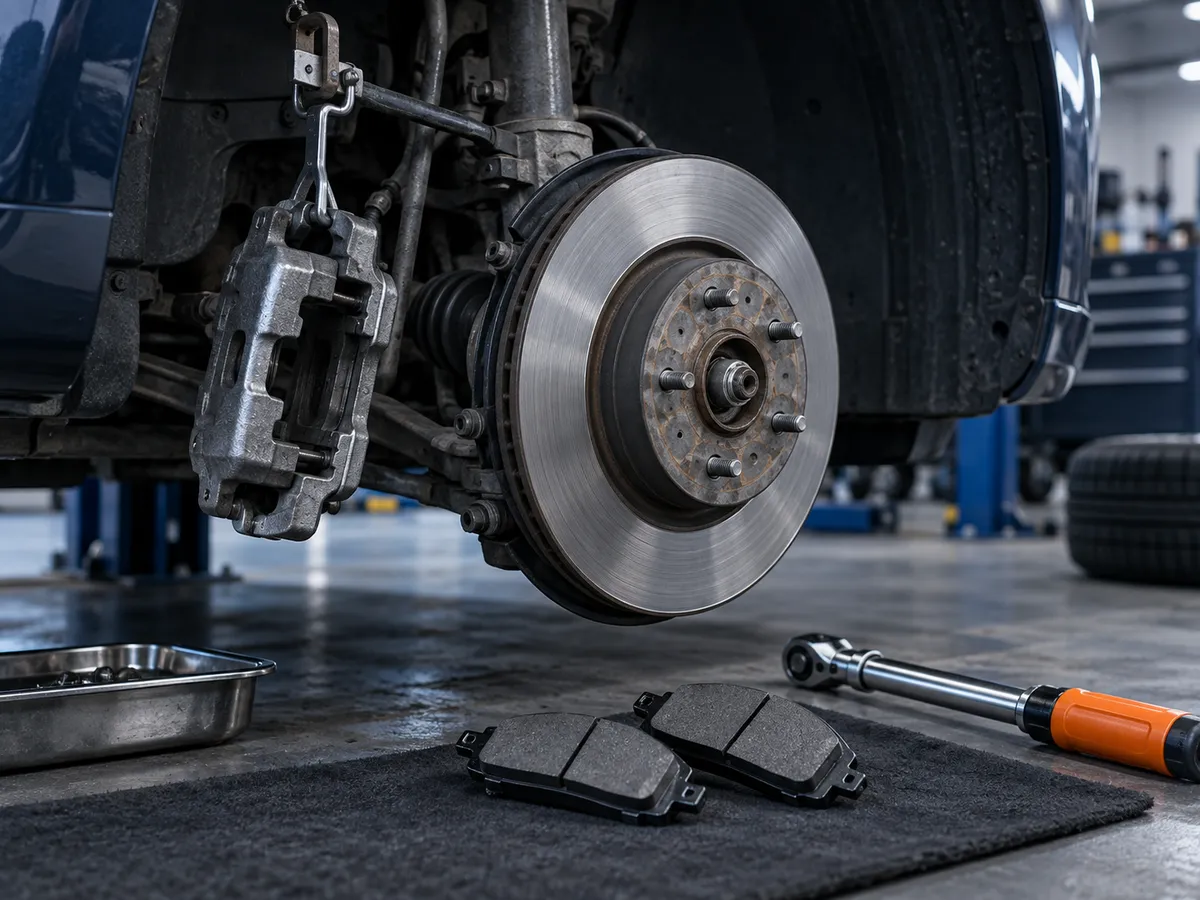
Toyota Rush showing the ABS warning light
On a Toyota Rush, this usually comes down to rear sensors on 4x4 or rear-drive axles or abs pump or module fault. Below are the causes that fit this car, most likely first, and what fixes each one.
Why a Toyota Rush is showing the ABS warning light
1.5 L 3SZ-VE petrol · 1.5 L 2NR-VE petrol
| Likely cause | How likely | The fix |
|---|---|---|
Rear sensors on 4x4 or rear-drive axlesFits the Rush On solid rear axles and 4x4s, the rear sensor sits in the differential or axle housing where mud and water collect. Inspection and live data confirm it. | Possible | Abs repair |
ABS pump or module faultFits the Rush Internal pump motor or module failures set specific codes. Diagnosis uses actuator tests through the scanner. | Less common | Abs airbag diagnosis |
Faulty wheel speed sensor A sensor that stops giving a signal disables ABS. A scan names the wheel, and live data shows the dead reading. | Common | Abs repair |
Damaged sensor wiring or connector Wires near the wheels get chafed by stones and corroded by water. Continuity tests and inspection find the break. | Common | Wiring repair |
Worn wheel bearing with built-in sensor ring On many newer cars the magnetic encoder sits in the wheel bearing; play or damage disturbs the signal. Bearing play and noise confirm it. | Possible | Wheel bearing replacement |
Low brake fluid Some systems share the warning between ABS and fluid level. The reservoir level and pad wear tell the story. | Possible | Brake fluid change |
Low system voltage A weak battery or charging fault can make the ABS module log low-voltage faults. Battery and charging tests confirm it. | Possible | Charging system inspection |
Causes marked “Fits the Rush” apply because of how this car is built: its petrol engine, MANUAL/AUTOMATIC gearbox, timing chain.
General guidance based on how these cars are built and how they commonly wear. Your car’s own history matters more than any list, which is why a technician confirms the cause before quoting.
Can you keep driving?
With only the amber ABS light, the brakes work normally but without anti-lock, so leave extra distance, especially on wet roads. If the red brake warning is on too, or the pedal feels wrong, stop and have it checked before driving.
Checks you can do first
- Check whether the red brake warning light is also on.
- Check the brake fluid level in the reservoir.
- Look behind each wheel for a torn or hanging sensor wire, especially after rough roads or a puncture repair.
- Note if the light came on after washing the car or driving through deep water.
How a technician diagnoses it on a Rush
Step 1
Read ABS codes and live wheel speed data on a road test.
Step 2
Inspect sensors, wiring and connectors at the indicated wheel.
Step 3
Check the reluctor ring or bearing encoder and bearing play.
Step 4
Check battery voltage and brake fluid level.
Other Toyota Rush problems
- Rush AC not coolingWidely reported on this model
- Rush knocking from the suspensionWidely reported on this model
- Rush jerking through its automatic gearboxWidely reported on this model
- Rush not starting
- Rush vibrating through the steering wheel
- Rush using too much fuel
- Rush leaking oil
- Rush draining its battery
- Rush showing a battery warning light
Parts usually involved

Get your Rush looked at
Tell us the Toyota Rush, the symptom and where the car is. A person calls back to say what we can do in your city and what the diagnosis costs.
Before you book
Questions we get asked

If your question is not here, ask it. We would rather answer honestly now than have you find out after booking.