
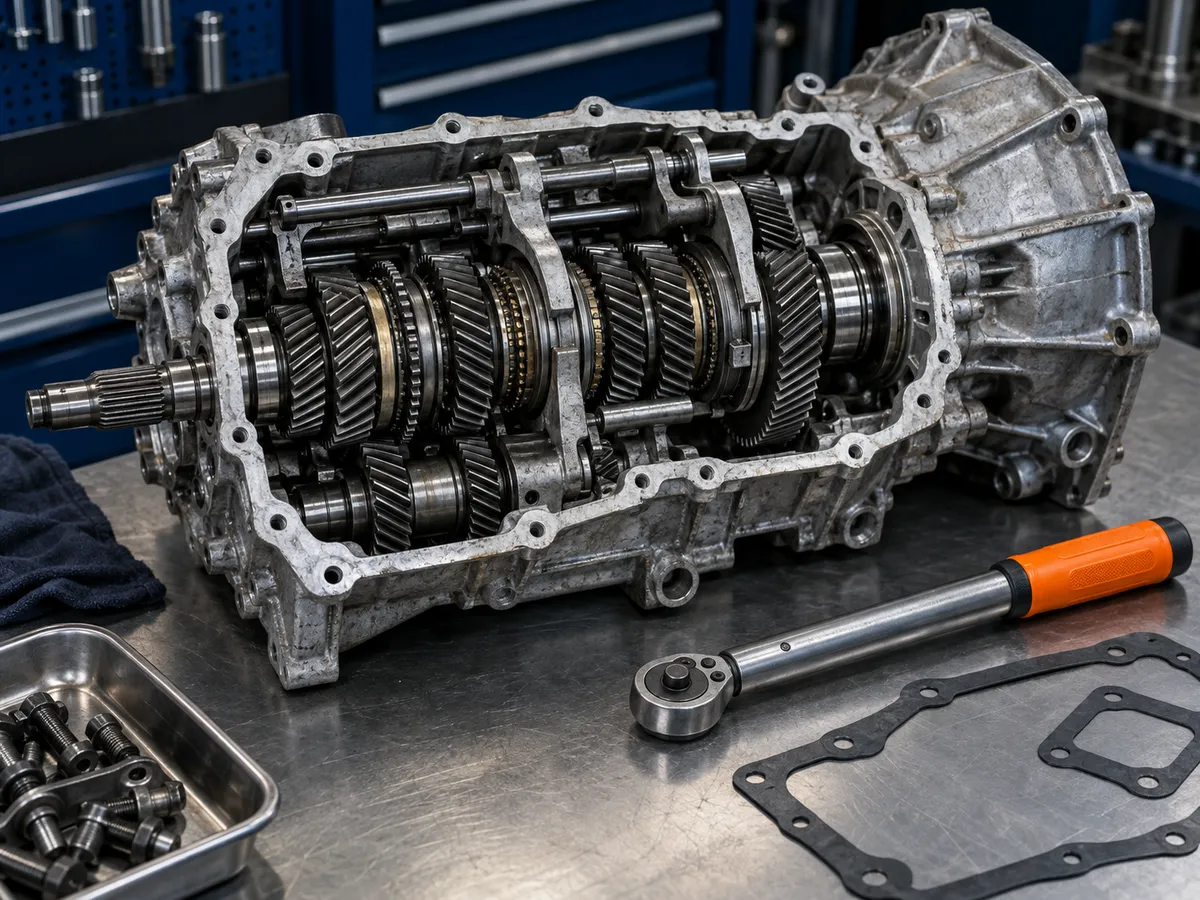
AGS gearbox problems
An AGS (auto gear shift) gearbox is a manual gearbox with electric actuators that work the clutch and shift. Common complaints are jerky shifts, delayed engagement, rolling back on slopes and warning lights. Many are fixed by a relearn, fluid or actuator service rather than a new gearbox.
Get it checked soon
Likely causes
| Likely cause | How likely | The fix |
|---|---|---|
Clutch position needs relearning As the clutch wears, the actuator must relearn its position; if not, engagement becomes harsh. A scan tool relearn fixes it. | Common | Transmission diagnosis |
Worn clutch plate The clutch in an AGS wears like a manual, especially in traffic. Slip data and inspection confirm it. | Common | Clutch plate replacement |
Electro-hydraulic actuator leak on an imported automated manualSome cars only Several imported automated manuals use an electro-hydraulic pump and accumulator rather than electric motors; low fluid or a tired pump causes slow shifts and warnings. Pump run-time data and fluid checks confirm it. | Possible | Transmission diagnosis |
Low battery voltage The actuators need good voltage; a weak battery causes erratic behaviour. A battery test rules it out. | Possible | Battery testing |
Rolling back on slopesSome cars only Most AGS gearboxes have no creep, so the car can roll back on hills. Using the brake and handbrake on slopes is normal technique. | Common | Transmission diagnosis |
Old gearbox oil Old oil makes the gears harder to select. Changing the oil helps smoothness. | Possible | Transmission oil change |
Worn engine mountsSome cars only Three-cylinder kei engines rock more, and worn mounts make the AGS nod between gears feel much stronger. Watching engine movement during shifts confirms it. | Possible | Engine mount replacement |
General guidance based on how these cars are built and how they commonly wear. Your car’s own history matters more than any list, which is why a technician confirms the cause before quoting.
Can you keep driving?
Usually yes, if it still selects gears. If it will not engage drive, flashes a warning, or gets stuck in neutral, stop and have it checked.
Checks you can do first
- Note whether jerks happen between particular gears.
- Check for gearbox warning lights or a flashing gear indicator.
- Try lifting off the accelerator slightly during upshifts.
- Check the battery condition; low voltage affects the actuators.
How a technician diagnoses it
Step 1
Scan the transmission module and read actuator data.
Step 2
Run clutch and gear position relearns.
Step 3
Check the battery and charging voltage.
Step 4
Inspect clutch wear and gearbox oil.
Cars where this is widely reported
- Suzuki Alto having AGS gearbox problemsAGS Altos are widely reported to jerk between first and second gear in slow traffic, which is often improved by a clutch learning reset and a check of the actuator.
- Suzuki Cultus having AGS gearbox problemsThe Cultus AGS shares the widely discussed hesitation and jerky shifts of Suzuki AGS cars, and slow-traffic use wears the clutch faster.
- Suzuki Wagon R having AGS gearbox problemsLocal Wagon R AGS cars are widely reported to hesitate when pulling away and to jerk on upshifts, usually traced to clutch wear or actuator calibration.
- Suzuki Every having AGS gearbox problemsAGS versions show the same jerky shifts and clutch wear as other Suzuki AGS cars, made worse by heavy loads.
- Nissan Clipper having AGS gearbox problemsSuzuki-based Clippers with AGS share the jerky shifts and clutch wear reported on the Every.
Warning lights and codes linked to it
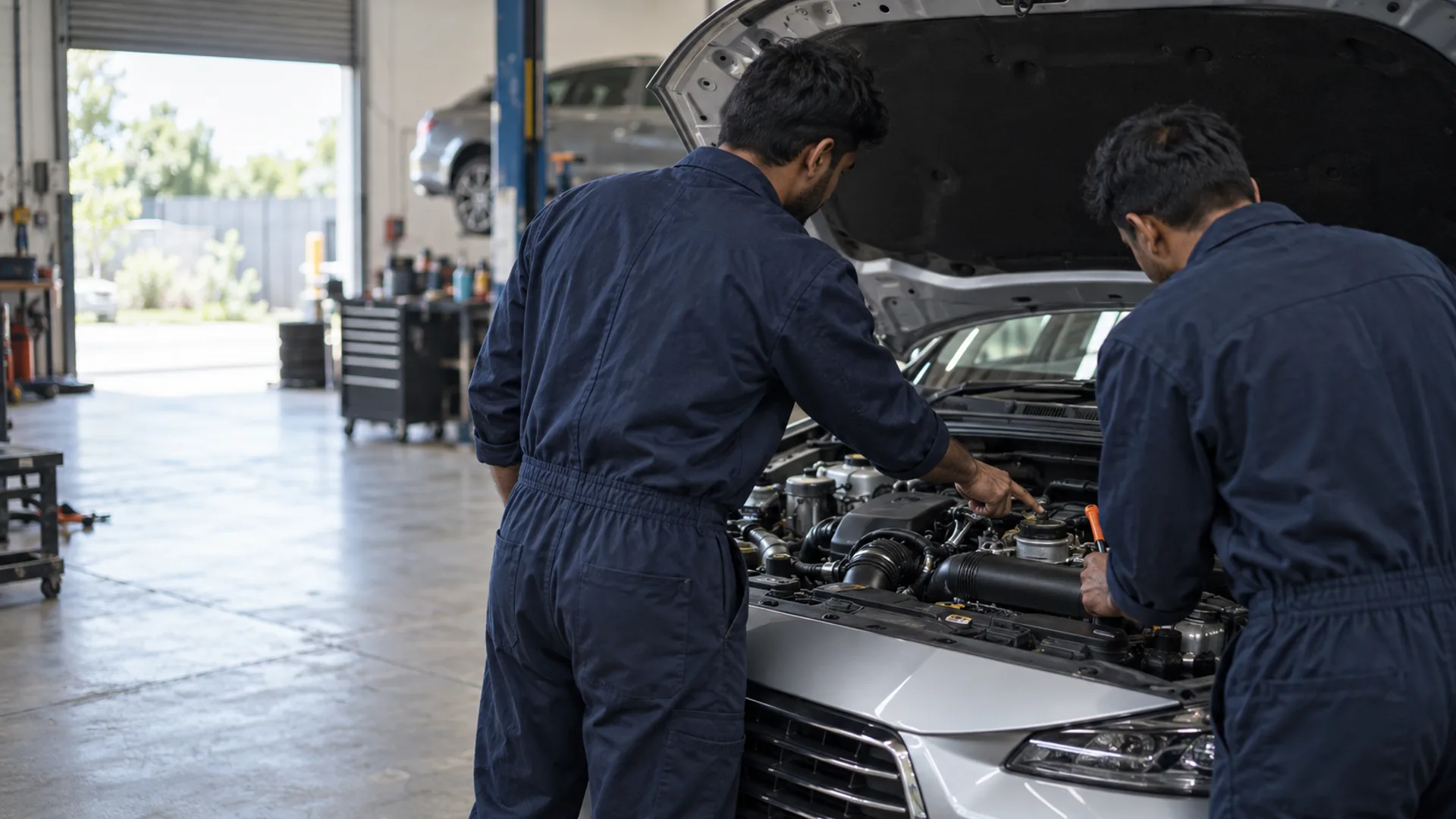
Have it diagnosed
Tell us the car, the symptom and your city. A person calls back to say what we can do there and what the diagnosis costs.
Before you book
Questions we get asked

If your question is not here, ask it. We would rather answer honestly now than have you find out after booking.