
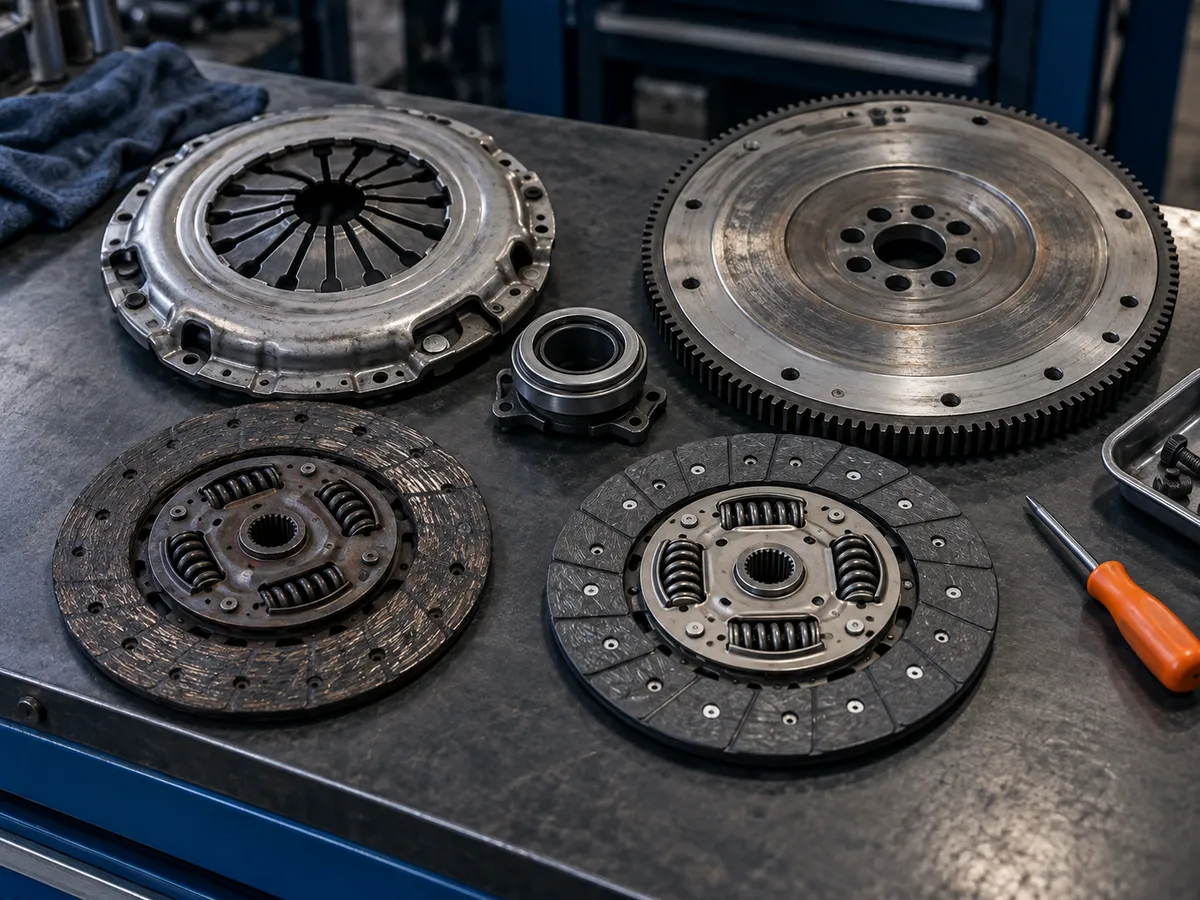
Clutch slipping
A slipping clutch lets the engine revs rise without the car speeding up, especially in higher gears or on hills. It usually means the clutch plate is worn. It will get worse and can leave you unable to move, so plan the repair soon.
Get it checked soon
Likely causes
| Likely cause | How likely | The fix |
|---|---|---|
Worn clutch plate Stop-start traffic and riding the clutch wear the friction material. A stall test in high gear confirms slip. | Common | Clutch plate replacement |
Weak pressure plate Heat weakens the pressure plate springs, reducing clamping force. It is inspected when the clutch is removed. | Possible | Pressure plate replacement |
Oil on the clutch A leaking crankshaft or gearbox seal contaminates the plate. Oil inside the bell housing confirms it. | Possible | Clutch kit replacement |
Clutch cable or hydraulic adjustmentSome cars only Cable clutches with no free play hold the clutch partly open. Checking pedal free play confirms it. | Possible | Clutch adjustment |
AGS clutch not learning or actuator faultSome cars only On AGS gearboxes an electric actuator works the clutch; if its learned position is off, the clutch slips or engages harshly. A scan tool relearn often restores it, otherwise the plate is worn. | Common | Transmission diagnosis |
DCT clutch pack wearSome cars only Dual-clutch gearboxes wear their clutch packs in heavy traffic; slip shows as flare between gears. Live data on clutch slip confirms it. | Possible | Dct transmission service |
Overloading on a pickup or vanSome cars only Constant heavy loads and hill starts wear the clutch faster. Usage pattern and plate condition show it. | Common | Clutch kit replacement |
General guidance based on how these cars are built and how they commonly wear. Your car’s own history matters more than any list, which is why a technician confirms the cause before quoting.
Can you keep driving?
Gently, for a short time. Avoid hills, heavy loads and hard acceleration. If it slips badly or smells of burning, stop and get it repaired.
Checks you can do first
- Note whether the revs rise without acceleration in higher gears.
- Check for a burning smell after climbing hills.
- Note whether the clutch pedal bite point is very high.
- On a manual, check that you are not resting your foot on the pedal while driving.
How a technician diagnoses it
Step 1
Road-test in high gear at low speed with firm throttle.
Step 2
Check pedal free play and hydraulic system.
Step 3
Scan AGS or DCT modules for clutch data and run a relearn where specified.
Step 4
Inspect the clutch and flywheel once removed.
Cars where this is widely reported
- Toyota Hilux slipping its clutchManual Hilux pickups used for loaded work wear their clutches faster, especially when used for towing or on hills.
- Suzuki Cultus slipping its clutchHigh-mileage manual Cultus cars, especially those used in city stop-start traffic, are often reported with slipping clutches.
- Suzuki Bolan slipping its clutchConstant starting with full loads wears the clutch early, and slipping on inclines is a frequent sign.
- Suzuki Ravi slipping its clutchPulling away fully loaded wears the clutch early, especially on hilly routes.
- Hyundai Porter slipping its clutchWorking Porters that carry heavy loads in city traffic often need clutch replacement earlier than private cars.
- Changan Karvaan slipping its clutchVans used for school runs or goods with frequent stops wear the clutch earlier than private use would.
Parts usually involved
Have it diagnosed
Tell us the car, the symptom and your city. A person calls back to say what we can do there and what the diagnosis costs.
Before you book
Questions we get asked
If your question is not here, ask it. We would rather answer honestly now than have you find out after booking.