
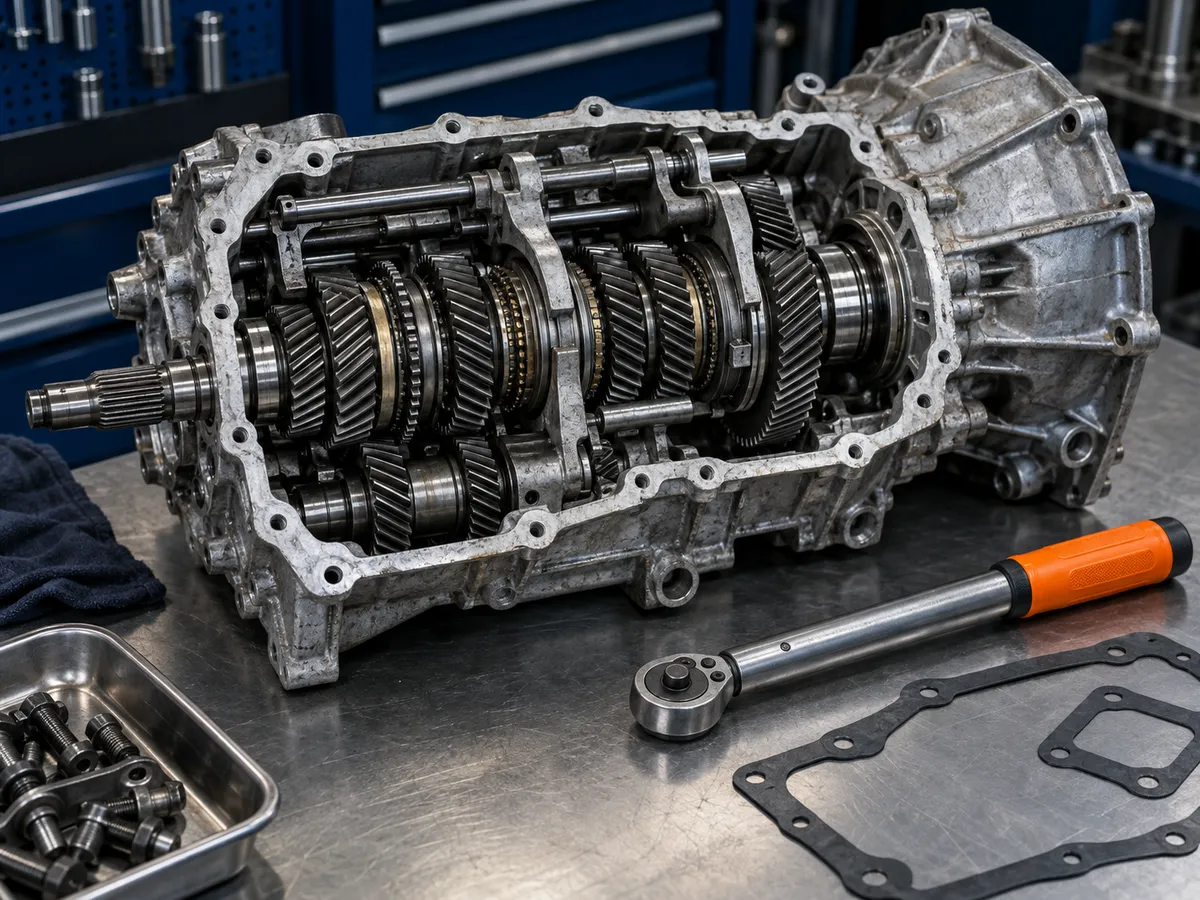
CVT judder or whine
A CVT that shudders when pulling away or whines as speed rises usually needs a fluid service, a software update or attention to worn internal parts. CVTs are sensitive to fluid type and heat. Acting early often avoids a gearbox replacement.
Get it checked soon
Likely causes
| Likely cause | How likely | The fix |
|---|---|---|
Old or wrong CVT fluid Worn fluid loses friction properties and causes judder. Checking fluid condition and type confirms it. | Common | Cvt transmission service |
Worn belt or pulleys Wear on the steel belt or pulley faces causes whine and slip. A road test and inspection confirm it. | Possible | Automatic transmission repair |
Torque converter lock-up judder The lock-up clutch shudders at light throttle. Fluid change and software updates often help. | Possible | Cvt transmission service |
Overheating in traffic and on climbsSome cars only Small cars with CVTs climbing hills in summer can overheat the fluid. Temperature data confirms it. | Possible | Transmission diagnosis |
Hybrid transaxle noise mistaken for CVT whineSome cars only Many hybrids use an eCVT with no belt; whine there comes from the transaxle gears or bearings. Hybrid diagnosis checks it. | Possible | Hybrid transaxle service |
Worn engine mounts amplifying judder Worn mounts transmit judder into the cabin. Mount inspection checks it. | Possible | Engine mount replacement |
Wheel bearing noise mistaken for CVT whineSome cars only A bearing hum rises with road speed and can sound like the gearbox. Lift inspection checks it. | Possible | Wheel bearing replacement |
General guidance based on how these cars are built and how they commonly wear. Your car’s own history matters more than any list, which is why a technician confirms the cause before quoting.
Can you keep driving?
Yes, gently, while the car still drives normally. If it slips, loses drive or shows a warning, stop and have it inspected.
Checks you can do first
- Note whether the judder happens from standstill, on hills, or at steady speed.
- Note whether the whine rises with road speed or engine speed.
- Check for a transmission warning light.
- Find out when the CVT fluid was last changed and which fluid was used.
How a technician diagnoses it
Step 1
Scan the CVT module and read fluid temperature and slip data.
Step 2
Check fluid level, condition and type.
Step 3
Road-test to separate gearbox noise from bearings or tyres.
Step 4
Apply software updates where available.
Cars where this is widely reported
- Toyota Yaris juddering or whining from the CVTAs with most CVT cars, a slight judder when pulling away in stop-start traffic is the gearbox complaint owners raise most, usually linked to fluid condition.
- Toyota Vitz juddering or whining from the CVTCVT-equipped 3rd-generation Vitz cars commonly develop judder or whine when the fluid has not been changed, which is frequent on imports with unclear history.
- Toyota Passo juddering or whining from the CVTCVT-equipped Passos with old fluid commonly judder when moving off and whine at speed.
- Toyota Premio juddering or whining from the CVTT260 Premios with neglected CVT fluid are known to judder at low speed and whine on the motorway.
- Honda Civic juddering or whining from the CVTTurbo Civics use a CVT that needs its fluid changed on time; old fluid brings judder at low speed.
- Honda City juddering or whining from the CVT6th-generation Cities with the CVT can judder at low speed or whine when the fluid is old, which is the most raised gearbox concern on this model.
- Honda BR-V juddering or whining from the CVTBR-V CVTs carrying full loads in traffic can develop judder when the fluid is overdue.
- Honda Fit juddering or whining from the CVTPetrol and second-generation hybrid Fits with CVTs judder or whine when the fluid is neglected.
- Honda N-WGN juddering or whining from the CVTImported N-WGNs with old CVT fluid commonly whine or judder.
- Honda HR-V juddering or whining from the CVTAs on other Honda CVTs, judder at low speed is the gearbox issue to watch for, and fluid condition is the first check.
- Suzuki Wagon R juddering or whining from the CVTJapanese-import Wagon Rs with CVTs can develop a whine or judder when the fluid has not been changed or the wrong fluid was used.
- Daihatsu Mira juddering or whining from the CVTMira CVTs are widely reported to whine or judder when the fluid is old or the wrong type, especially in stop-start traffic.
- Daihatsu Move juddering or whining from the CVTOwners report CVT whine and judder on Moves with neglected fluid, particularly when pulling away.
- Daihatsu Tanto juddering or whining from the CVTCVT whine and judder appear on Tantos with old or incorrect fluid.
- Nissan Dayz juddering or whining from the CVTDayz CVTs are reported to whine or hesitate when fluid has been neglected.
- Nissan Moco juddering or whining from the CVTLast-generation Mocos with CVTs can whine or judder when fluid changes are skipped.
- Nissan Note juddering or whining from the CVTPetrol Notes with CVTs are widely reported to whine or judder when fluid has been neglected.
- Hyundai Elantra juddering or whining from the CVTAs with most CVTs, old or wrong fluid on the petrol Elantra can bring a whine or shudder when pulling away.
- Toyota Probox juddering or whining from the CVTOn facelift CVT cars, judder when pulling away under load is reported where the fluid has never been changed.
- Toyota Noah juddering or whining from the CVTWhine or judder from the CVT is widely reported on high-mileage Noahs, especially where the fluid has not been changed.
- Toyota Voxy juddering or whining from the CVTAs on the Noah, CVT whine and judder are commonly reported on Voxys with high mileage or neglected fluid.
- Toyota Belta juddering or whining from the CVTOn CVT-equipped cars, judder from a standstill is reported once the fluid is old.
- Toyota Corolla Axio juddering or whining from the CVTJudder when pulling away is reported on petrol CVT Axios that have gone without a fluid change.
- Honda N-Box juddering or whining from the CVTJudder or whine from the CVT is reported on older N-Boxes with neglected fluid.
- Honda Insight juddering or whining from the CVTJudder when pulling away is reported on Insights whose CVT fluid has not been changed.
- Suzuki Hustler juddering or whining from the CVTCVT whine or judder is reported on higher-mileage Hustlers with old fluid.
- Suzuki Spacia juddering or whining from the CVTJudder from the CVT is reported on older Spacias where the fluid has not been changed.
- Suzuki Kizashi juddering or whining from the CVTCVT whine and judder are among the most reported issues on ageing Kizashis.
- Daihatsu Boon juddering or whining from the CVTOn CVT-equipped Boons, judder from standstill is reported once the fluid ages.
- Mazda Carol juddering or whining from the CVTAs on the Japanese Alto, CVT judder is reported on newer Carols with ageing fluid.
- Mazda Flair juddering or whining from the CVTCVT judder and whine are reported on older Flairs with neglected fluid.
- Mitsubishi eK Wagon juddering or whining from the CVTAs on the Dayz, CVT whine and judder are commonly reported on older eK Wagons.
- DFSK Glory 580 juddering or whining from the CVTCVT judder or hesitation when pulling away is a reported complaint on these cars.
Warning lights and codes linked to it
Parts usually involved
Have it diagnosed
Tell us the car, the symptom and your city. A person calls back to say what we can do there and what the diagnosis costs.
Before you book
Questions we get asked

If your question is not here, ask it. We would rather answer honestly now than have you find out after booking.