
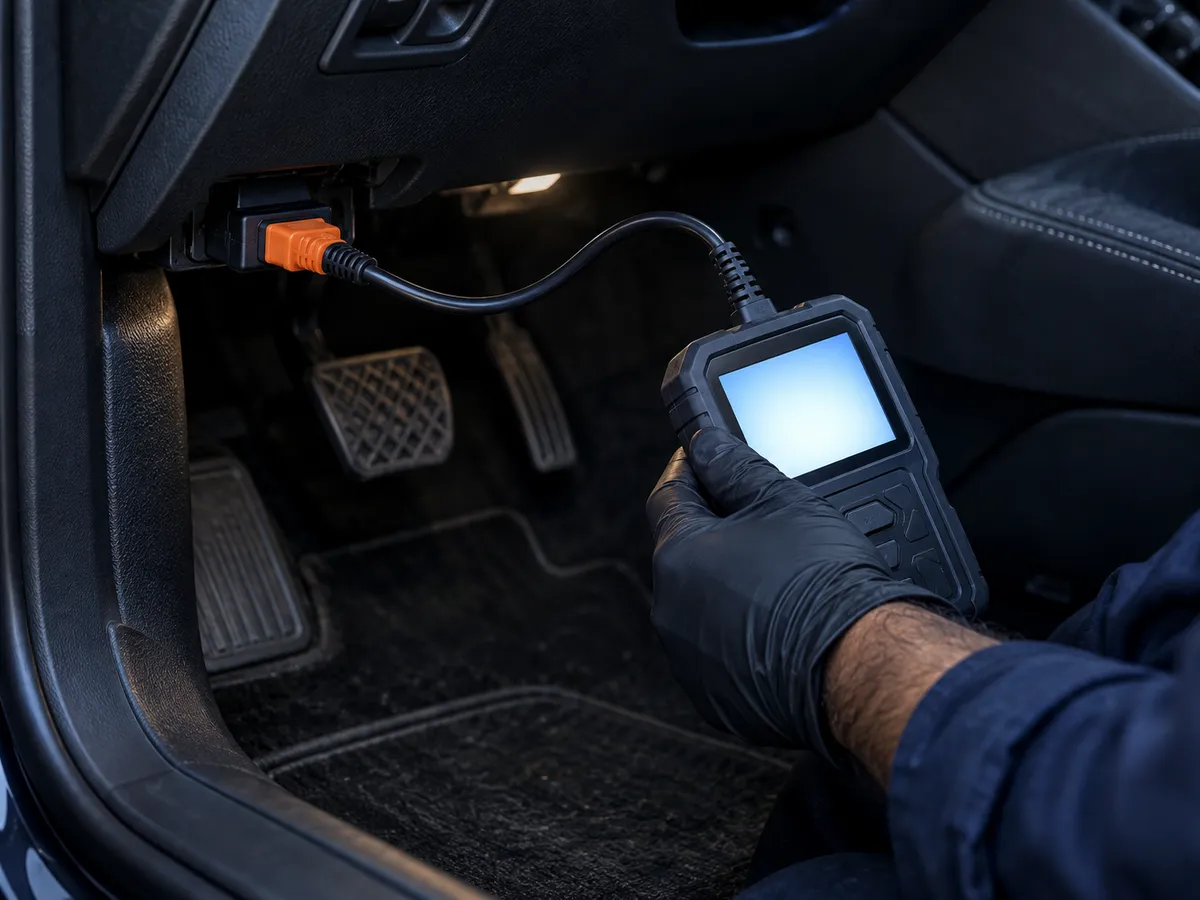
Honda City showing a check engine light
On a Honda City, this usually comes down to lean or rich codes after cng conversion or transmission fault code. Below are the causes that fit this car, most likely first, and what fixes each one.
Why a Honda City is showing a check engine light
1.3 L L13A i-DSI petrol · 1.3 L L13 i-VTEC petrol · 1.5 L L15 i-VTEC petrol
| Likely cause | How likely | The fix |
|---|---|---|
Lean or rich codes after CNG conversionFits the City An untuned CNG kit or emulator sends the engine computer readings it does not expect, which sets fuel-trim and oxygen-sensor codes. Comparing trims on petrol and gas isolates the kit. | Common | Cng kit inspection |
Transmission fault codeFits the City Automatic, CVT and AGS gearboxes report many of their faults through the engine light. A scan of the transmission module shows them. | Possible | Transmission diagnosis |
Oxygen sensor fault A slow or dead oxygen sensor upsets fuel trims and triggers codes. Live data showing a flat or slow sensor signal confirms it. | Common | Oxygen sensor replacement |
Misfire from plugs or coils Worn plugs or a cracked coil cause misfire codes. Swapping a coil between cylinders and watching whether the code moves confirms it. | Common | Engine misfire repair |
Catalytic converter efficiency fault A worn or damaged converter, often after long misfires, sets an efficiency code. The two oxygen sensor signals are compared to confirm it. | Possible | Catalytic converter diagnosis |
Loose fuel cap or evaporative leak A cap that does not seal sets an evaporative system code on cars that monitor it. Tightening the cap and clearing the code is the first test. | Less common | Obd scanning |
Causes marked “Fits the City” apply because of how this car is built: its petrol engine, MANUAL/AUTOMATIC/CVT gearbox, timing chain or a CNG conversion.
General guidance based on how these cars are built and how they commonly wear. Your car’s own history matters more than any list, which is why a technician confirms the cause before quoting.
Can you keep driving?
A steady light with the car driving normally is usually safe for a short trip to get scanned. A flashing light means an active misfire that can overheat the catalytic converter; drive gently and as little as possible.
Checks you can do first
- Note whether the light is steady or flashing, and whether the car feels different.
- Check the fuel cap is tight and clicks shut.
- Check the oil level and the temperature gauge.
- Note when it came on: after refuelling, after CNG work, in heavy heat or after rain.
How a technician diagnoses it on a City
Step 1
Read all stored and pending codes from every module with an OBD scanner, along with freeze-frame data.
Step 2
Check live data related to the code, such as fuel trims or misfire counters.
Step 3
Test the suspect component directly rather than replacing parts from the code alone.
Step 4
Clear codes after repair and road-test to confirm the light stays off.
Other Honda City problems
- City AC not coolingWidely reported on this model
- City knocking from the suspensionWidely reported on this model
- City misfiringWidely reported on this model
- City juddering or whining from the CVTWidely reported on this model
- City not starting
- City cranking but not starting
- City squeaking when braking
- City having a soft brake pedal
- City vibrating through the steering wheel
Parts usually involved

Get your City looked at
Tell us the Honda City, the symptom and where the car is. A person calls back to say what we can do in your city and what the diagnosis costs.
Before you book
Questions we get asked

If your question is not here, ask it. We would rather answer honestly now than have you find out after booking.