
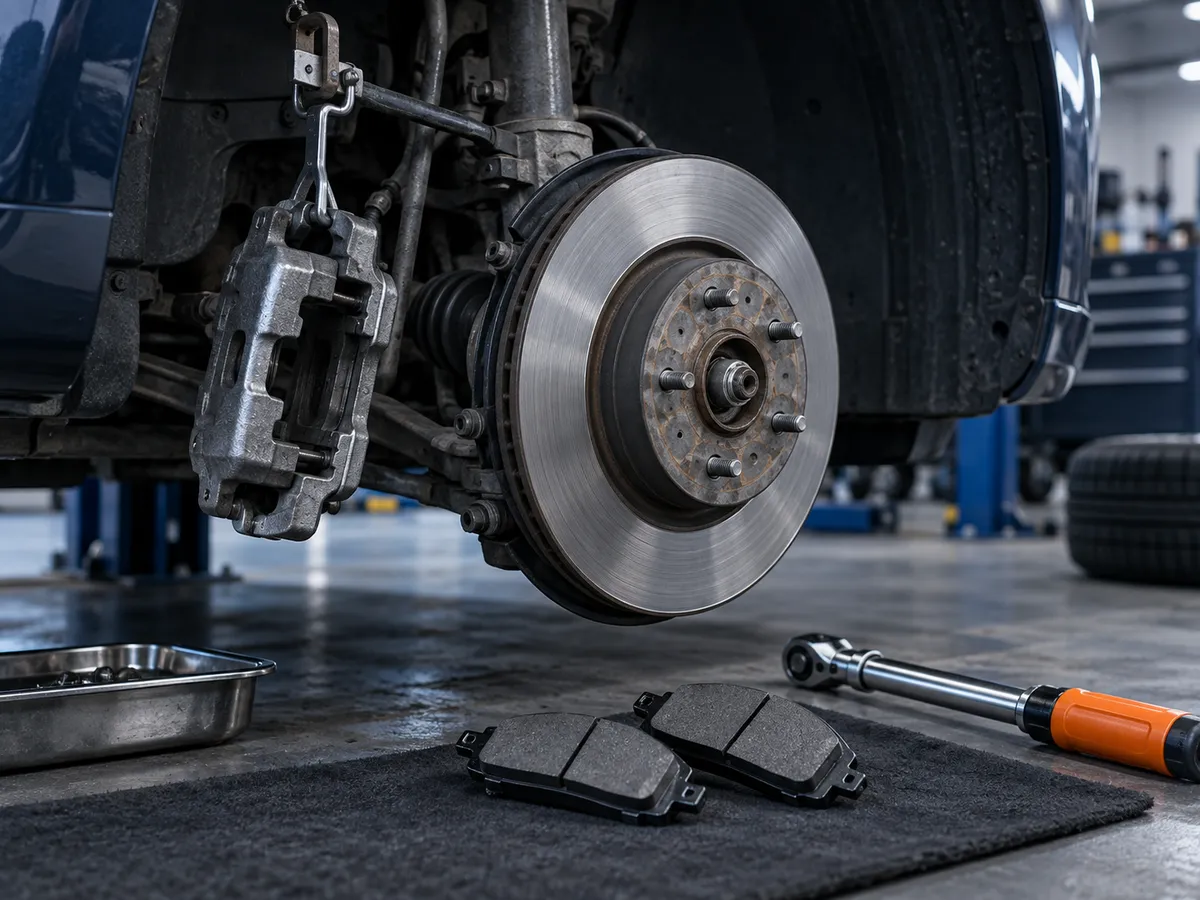
Honda City having a soft brake pedal
On a Honda City, this usually comes down to rear drum shoes out of adjustment or corroded steel brake lines on an older car. Below are the causes that fit this car, most likely first, and what fixes each one.
Why a Honda City is having a soft brake pedal
1.3 L L13A i-DSI petrol · 1.3 L L13 i-VTEC petrol · 1.5 L L15 i-VTEC petrol
| Likely cause | How likely | The fix |
|---|---|---|
Rear drum shoes out of adjustmentFits the City Drums with seized self-adjusters leave a large gap, adding pedal travel. Adjusting the shoes often restores the pedal. | Possible | Brake drum service |
Corroded steel brake lines on an older carFits the City Years of moisture rust the steel lines until they weep or burst. An inspection under the car shows rust and wet spots. | Possible | Brake caliper repair |
Air in the brake lines Air compresses where fluid does not, so the pedal feels spongy. It often follows recent brake work done without proper bleeding. | Common | Brake fluid change |
Old brake fluid that has absorbed moisture Brake fluid absorbs water over time, lowering its boiling point. In summer heat or on long descents such as the Murree road, it can boil and the pedal fades. A moisture test confirms it. | Common | Brake fluid change |
Fluid leak from a line, hose or caliper Any leak lets pressure escape. Wet calipers, inner wheel rims or rusty lines show where. | Possible | Brake caliper repair |
Worn master cylinder seals If the pedal slowly sinks under steady pressure with no external leak, the master cylinder seals are bypassing. | Possible | Master cylinder repair |
Causes marked “Fits the City” apply because of how this car is built: its petrol engine, MANUAL/AUTOMATIC/CVT gearbox, timing chain or a CNG conversion.
General guidance based on how these cars are built and how they commonly wear. Your car’s own history matters more than any list, which is why a technician confirms the cause before quoting.
Can you keep driving?
No. A soft pedal can fail completely without warning. If it happens while driving, pump the pedal, use the gears to slow down, and use the handbrake gently to stop.
Checks you can do first
- Check the brake fluid reservoir level; low fluid points to a leak or very worn pads.
- Look behind each wheel and under the master cylinder for wet patches.
- With the engine off, press the pedal several times; it should get firmer.
- Check whether the brake warning light is on.
How a technician diagnoses it on a City
Step 1
Inspect the whole hydraulic system for leaks with the car raised.
Step 2
Test the brake fluid for moisture content.
Step 3
Bleed the system in the correct sequence and recheck the pedal.
Step 4
Test the master cylinder and booster or electronic actuator.
Other Honda City problems
- City AC not coolingWidely reported on this model
- City knocking from the suspensionWidely reported on this model
- City misfiringWidely reported on this model
- City juddering or whining from the CVTWidely reported on this model
- City not starting
- City cranking but not starting
- City showing a check engine light
- City squeaking when braking
- City vibrating through the steering wheel
Parts usually involved
Brake pedal soft or spongy on other cars
Get your City looked at
Tell us the Honda City, the symptom and where the car is. A person calls back to say what we can do in your city and what the diagnosis costs.
Before you book
Questions we get asked

If your question is not here, ask it. We would rather answer honestly now than have you find out after booking.